Still on the wire?
It may nevertheless have detached from the tooth.

A loose bracket has detached from the tooth surface. It may still hang on the archwire or have come away completely. Contact the treating orthodontic team; do not glue it back or pull on the wire yourself.
For training & practice ↓
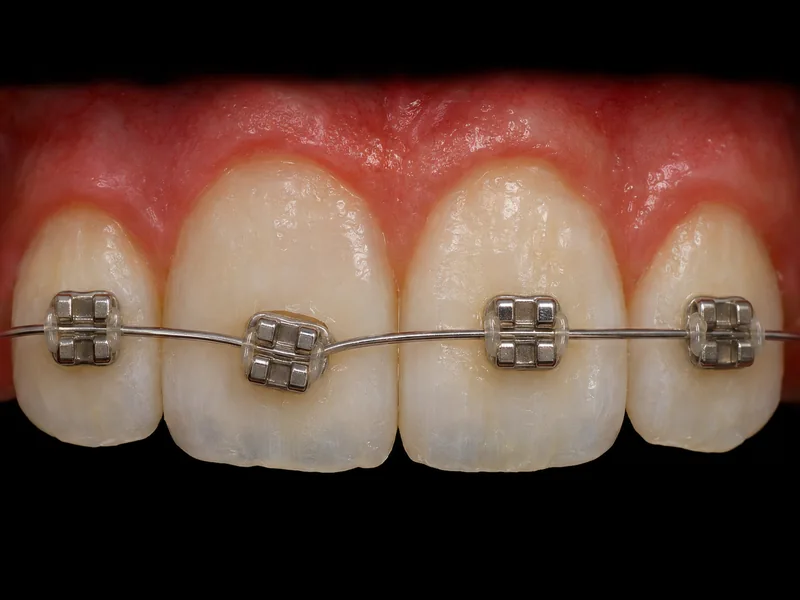
A detached bracket can slide along the wire. It no longer transfers the planned force to that tooth as intended.
Orthodontic wax can temporarily protect a rubbing area. It reduces friction but does not repair the appliance.
Explain where the part has loosened and whether there is pain or injury. The team determines when and how to manage it.
It may nevertheless have detached from the tooth.
It can temporarily reduce friction.
Do not glue, pull or cut.
Three steps. No audio.
Each scene can also be selected manually.

Silent educational film with German on-screen text and simplified teaching images. Not a patient case or a promised treatment outcome. The full English explanation is available as text.
A bracket is the attachment on the tooth. The archwire connects brackets. A detached attachment and a displaced or sharp wire are different defects.
Ask the treating team. Urgency depends on symptoms and the defect; the routine appointment is not automatically the right time.
No. Household glue and home repairs can cause harm. Keep a completely detached part and bring it to the appointment.
Not every defect is a medical emergency. Severe symptoms or injury need prompt help. Suspected inhalation of a part requires urgent medical assessment; call 112 if there is breathing difficulty.
You can bring this question to your appointment:
Where has the bracket loosened, and how soon should it be checked?
Report a bracket problem to the team treating you with fixed braces. They can assess its urgency and advise on the next step.
Arrange an assessmentAppointment selection at DoctolibA bracket is the attachment on the tooth. The archwire connects brackets. A detached attachment and a displaced or sharp wire are different defects.
Editorial research: . General information, not an individual diagnosis or treatment recommendation. Teaching illustrations are simplified and do not depict a patient case.