What does CAD stand for?
Computer-aided design.

A CAD/CAM restoration is designed on a computer and made using computer-controlled equipment. For a milled crown, a scan records the necessary surfaces. The checked data guide the design and then the physical restoration.
For training & practice ↓
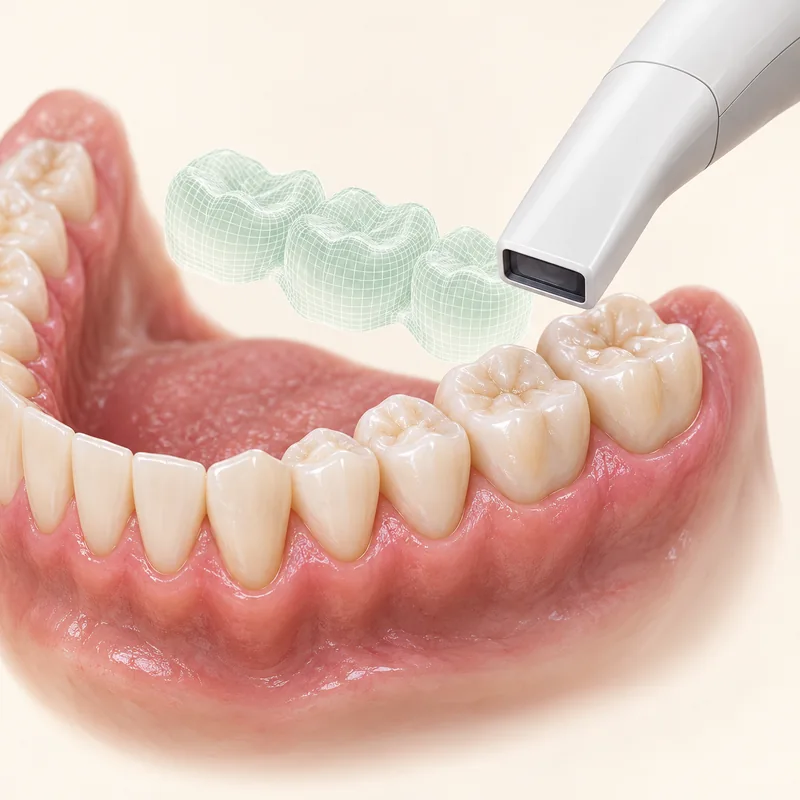
Surfaces are digitised in the mouth or on a cast. For a crown, the neighbouring teeth, opposing arch and margins of the prepared tooth also matter.
The digital tooth shape is adjusted to the records. This includes contact with the neighbouring teeth and the shape of the biting surface.
A milling or grinding tool shapes the restoration from a blank. The finishing steps depend on the chosen material.
Computer-aided design.
Among other things, marginal fit, proximal contacts and the bite.
Computer-aided manufacturing.
Three steps. No audio.
Each scene can also be selected manually.

Silent film with English on-screen text and simplified teaching images.
Scanning supplies geometric information. Design and manufacture are further stages.
CAD/CAM describes a workflow. Different systems can process different materials for different restorations. Ask separately about production and material.
Scanning and manufacturing have limitations. The clinician checks seating, margins, contacts with neighbours and the bite. Findings may warrant adjustment or remaking.
It does not set a timetable. Laboratory involvement, material, finishing and the required checks affect the schedule.
A question to bring along
Which material and production steps are planned for my restoration?
A restorative consultation can clarify production, alternatives and the try-in for your tooth.
Choose a dental appointmentAppointment selection at DoctolibA useful design needs complete starting records. Its suitability is verified in the patient.
Editorial research: . General information, not an individual diagnosis or treatment recommendation. Teaching illustrations are simplified and do not depict a patient case.
If you turn this on, this website stores which guides you open, separately from advertising preferences. The markers expire after a fixed 30-day period from activation. The list is not sent to us by this feature. You can turn it off here and delete the markers.
Other people using the same browser profile can also see the markers. German and English versions share one marker. Expired entries are removed the next time you open a page with this feature; deleting browser data may remove them earlier. “Viewed” means opened, not read or completed.