Can CPC replace brushing?
Brushing physically disrupts the layer of plaque. In the clinical study the rinse was used in addition to brushing. Choose a suitable aid to clean between the teeth as well.

CPC stands for cetylpyridinium chloride, an antibacterial ingredient in some mouthwashes. It can complement the daily physical removal of plaque. Expected benefits depend on the particular formulation and its regular use.
For training & practice ↓
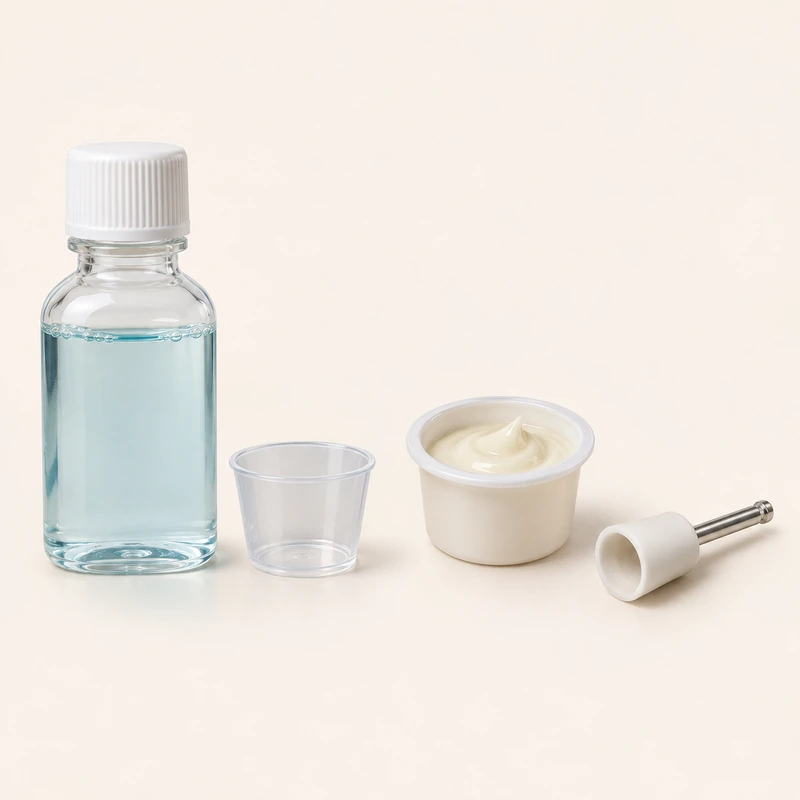
The bottle and cup illustrate a mouthrinse. Check the label to establish whether it contains CPC.
Disclosed areas show where plaque accumulates. A rinse can complement mechanical cleaning.
Even when using a rinse, clean between the teeth with an aid suited to the space.
The bottle and cup illustrate a mouthrinse. Check the label to establish whether it contains CPC.
Disclosed areas show where plaque accumulates. A rinse can complement mechanical cleaning.
Even when using a rinse, clean between the teeth with an aid suited to the space.
Brushing physically disrupts the layer of plaque. In the clinical study the rinse was used in addition to brushing. Choose a suitable aid to clean between the teeth as well.
In one six-month trial the CPC rinse reduced plaque more than the control rinse. The difference in bleeding scores at six months was inconclusive. Have recurring bleeding assessed.
CPC acts on microorganisms. Fluoride is used primarily to prevent decay. Some products combine active ingredients, so check the label.
Three steps. No audio.
Each scene can also be selected manually.

Silent film with English on-screen text and simplified teaching images.
Both may appear in mouthwashes and serve different purposes in oral care.
Brushing physically disrupts the layer of plaque. In the clinical study the rinse was used in addition to brushing. Choose a suitable aid to clean between the teeth as well.
In one six-month trial the CPC rinse reduced plaque more than the control rinse. The difference in bleeding scores at six months was inconclusive. Have recurring bleeding assessed.
CPC acts on microorganisms. Fluoride is used primarily to prevent decay. Some products combine active ingredients, so check the label.
A question to ask
Would CPC suit my situation, or does the cause of bleeding need assessment?
Point out sites that bleed repeatedly at a dental visit.
Choose an appointmentAppointment selection at DoctolibA change in a plaque score does not automatically imply the same change in bleeding scores or pocket depth.
Editorial research: . General information, not an individual diagnosis or treatment recommendation. Teaching illustrations are simplified and do not depict a patient case.
If you turn this on, this website stores which guides you open, separately from advertising preferences. The markers expire after a fixed 30-day period from activation. The list is not sent to us by this feature. You can turn it off here and delete the markers.
Other people using the same browser profile can also see the markers. German and English versions share one marker. Expired entries are removed the next time you open a page with this feature; deleting browser data may remove them earlier. “Viewed” means opened, not read or completed.