What is the gel for?
It helps with removal of softened dentine.

A special gel helps loosen softened carious dentine, which is then removed with a hand instrument. The term describes the removal method. Lesion depth and the eventual seal are separate considerations.
For training & practice ↓
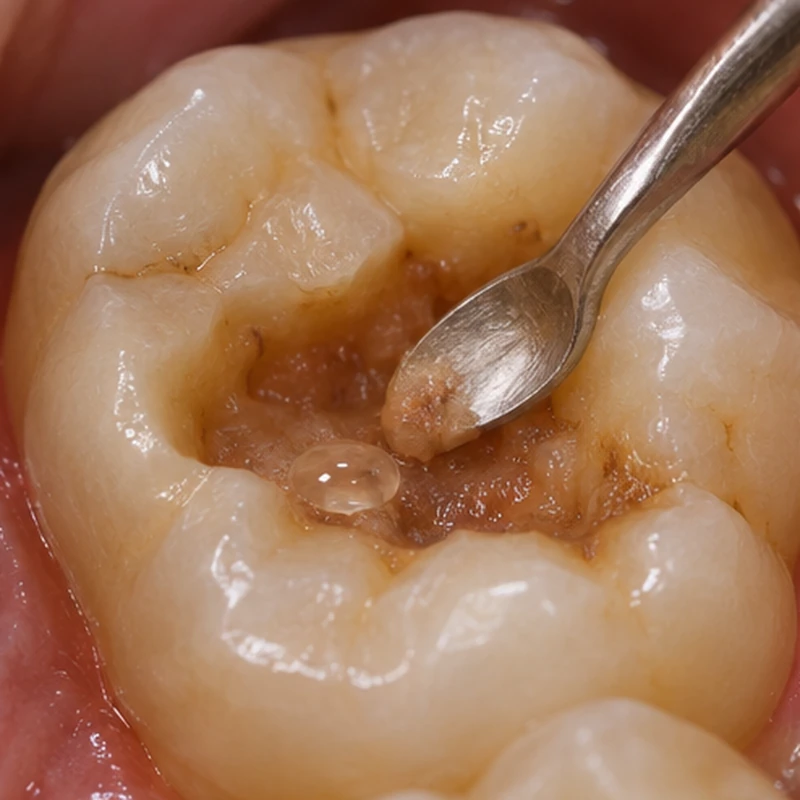
A spoon-shaped instrument rests in an open cavity. A suitable gel helps the clinician remove softened tissue mechanically.
The chewing surface may overlie the actual defect. Additional rotary access may be needed depending on the tooth.
The dentist assesses the remaining tissue and margins after removal. A definitive or temporary restoration is selected for the actual lesion.
It helps with removal of softened dentine.
Children’s primary molars.
A seal appropriate for the defect.
Three steps. No audio.
Each scene can also be selected manually.

Silent film with English on-screen text and simplified teaching images.
This describes how much altered tissue is removed in different zones. Chemomechanical describes the method used.
No. Access or shaping may require other instruments. Anaesthesia needs are also individual.
A small study in primary molars found lower reported pain with one papain product than with the comparison method. That does not establish a pain-free result for every tooth.
The method requires depth assessment, controlled tissue removal and an appropriate seal. Ordinary toothpaste serves a different purpose.
A question to bring along
Which method fits the depth and location of my lesion?
A suspected cavity can be examined to establish its depth and options for preserving the tooth.
Choose an appointmentAppointment selection at DoctolibThe method alone does not determine how much tissue needs removing.
Editorial research: . General information, not an individual diagnosis or treatment recommendation. Teaching illustrations are simplified and do not depict a patient case.
If you turn this on, this website stores which guides you open, separately from advertising preferences. The markers expire after a fixed 30-day period from activation. The list is not sent to us by this feature. You can turn it off here and delete the markers.
Other people using the same browser profile can also see the markers. German and English versions share one marker. Expired entries are removed the next time you open a page with this feature; deleting browser data may remove them earlier. “Viewed” means opened, not read or completed.