When is the principle relevant?
For certain deep defects or selected concerns about gum levels.

Surgical crown lengthening exposes more existing tooth tissue. The gum level and, depending on the findings, the underlying bone are altered. The tooth does not grow. The procedure may be considered before restoring certain deep defects or for selected concerns about gum appearance.
For training & practice ↓
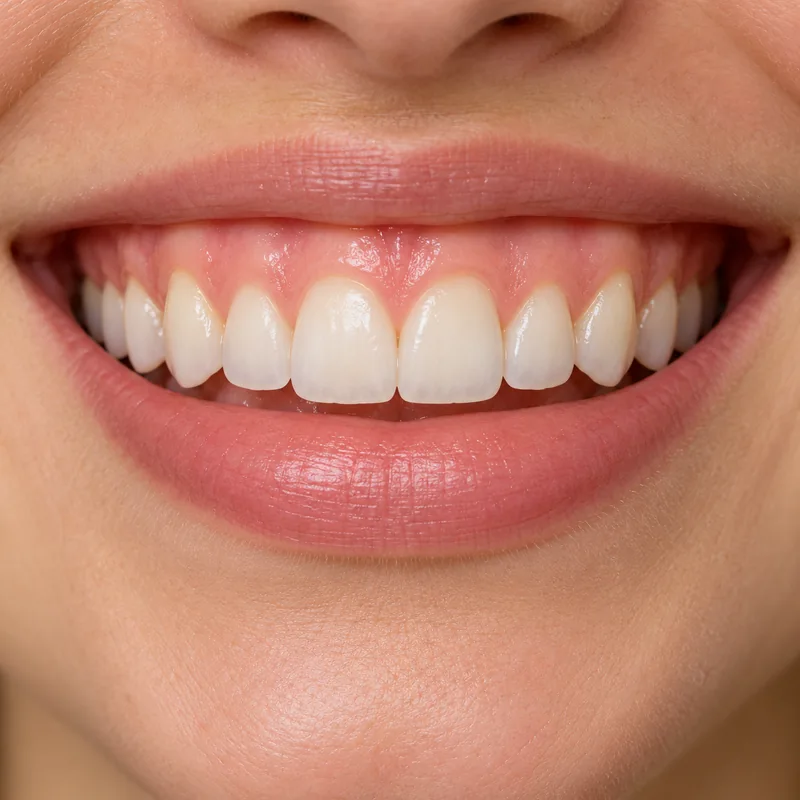
When a defect or fracture edge lies well below the gum, more accessible sound tooth structure may be needed for restoration. This does not make every tooth restorable.
Any necessary change to gum and possibly bone is planned carefully. Root length, supporting tissues and neighbouring teeth matter.
Tissues need healing and review after surgery. Sensitivity, altered gum margins and other surgical risks are discussed beforehand; timing of the final restoration is individual.
For certain deep defects or selected concerns about gum levels.
An examination of restorability, tissues and possible restoration margins.
Individual healing reviews and subsequent restoration planned accordingly.
Three steps. No audio.
Each scene can also be selected manually.

Silent educational film with German on-screen text and simplified teaching images. Not a patient case or a promised treatment outcome. The full English explanation is available below.
When a defect or fracture edge lies well below the gum, more accessible sound tooth structure may be needed for restoration. This does not make every tooth restorable.
Any necessary change to gum and possibly bone is planned carefully. Root length, supporting tissues and neighbouring teeth matter.
Tissues need healing and review after surgery. Sensitivity, altered gum margins and other surgical risks are discussed beforehand; timing of the final restoration is individual.
The anatomical crown is the enamel-covered part of a tooth. The clinical crown is the part visible in the mouth; it can change when the gum level changes.
No. An artificial crown restores a tooth. Surgical crown lengthening alters surrounding tissues to expose more of the existing tooth.
No. This depends on the tissue relationships and treatment goal. A photograph alone cannot determine the necessary approach.
No. A visible gum display can have different causes. Examination is needed to determine whether this procedure would be appropriate at all.
An editorially suggested question for a conversation with Dr. med. dent. Niusha Barahmand Pour:
How much sound tooth tissue and support remain for a restoration that makes sense in the longer term?
A deep fracture edge or unclear crown margin needs careful assessment.
Discuss the findings and restorationAppointment selection at DoctolibThe anatomical crown is the enamel-covered part of a tooth. The clinical crown is the part visible in the mouth; it can change when the gum level changes.
Editorial research: . General information, not an individual diagnosis or treatment recommendation. Teaching illustrations are simplified and do not depict a patient case.