Where is it made?
On a working cast or in a digital model.

A diagnostic wax-up shows proposed tooth shapes on a model. The laboratory builds them in wax or designs them digitally. This allows discussion of length, contours and available space before the teeth are changed.
For training & practice ↓
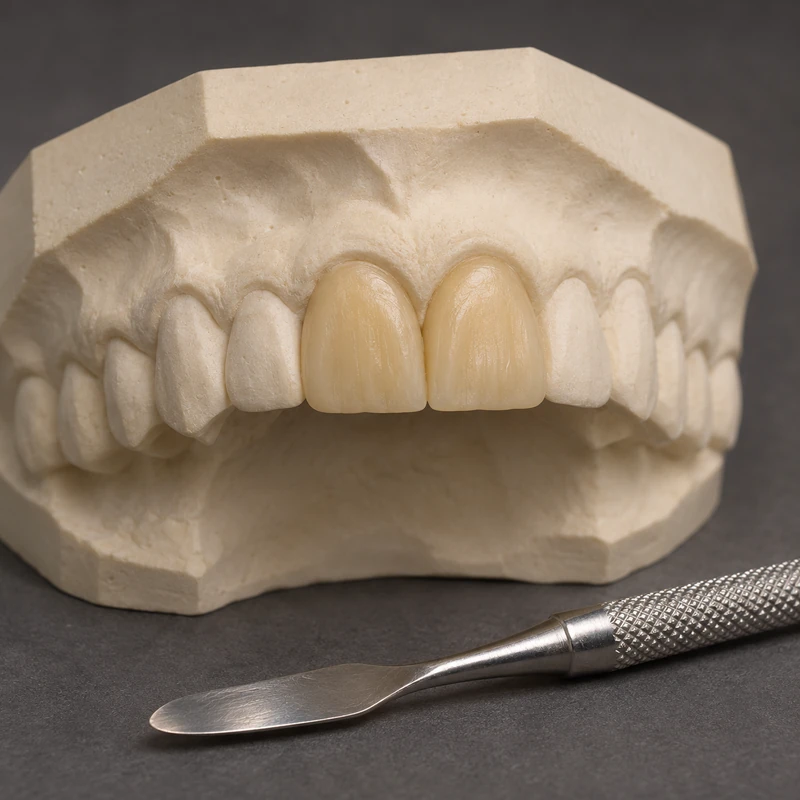
The laboratory shapes the proposed outer surface. Even a small change at the cutting edge can alter the proportions of a tooth.
Bringing the models together helps show whether the proposed shape will fit. Contacts with opposing teeth also matter.
A transfer index can carry the plan into a temporary trial in the mouth. Feedback can then guide changes to the design.
On a working cast or in a digital model.
For example, length, width, spaces and contacts.
A model has limits in predicting tissue response, final shade and clinical outcomes.
Three steps. No audio.
Each scene can also be selected manually.

Silent film with English on-screen text and simplified teaching images.
The wax-up is the plan on a model. A mock-up temporarily transfers a proposed shape onto the teeth so it can be assessed in the mouth.
Building a diagnostic shape on a model leaves the natural teeth untouched. Whether tooth preparation would later be needed is a separate question.
It mainly shows shape and spatial relationships. Shade and the optical properties of the final material are assessed separately.
Transfer, material thickness and available space may affect the temporary shape. A trial is also an opportunity to request adjustments.
When considering a change in tooth shape
Which changes could I try in my mouth before deciding?
Discuss your preferences for tooth shape using a planning model.
Choose an appointmentAppointment selection at DoctolibA digital wax-up is the virtual design of the proposed shape. A scan of the untreated teeth alone records their original shape.
Editorial research: . General information, not an individual diagnosis or treatment recommendation. Teaching illustrations are simplified and do not depict a patient case.
If you turn this on, this website stores which guides you open, separately from advertising preferences. The markers expire after a fixed 30-day period from activation. The list is not sent to us by this feature. You can turn it off here and delete the markers.
Other people using the same browser profile can also see the markers. German and English versions share one marker. Expired entries are removed the next time you open a page with this feature; deleting browser data may remove them earlier. “Viewed” means opened, not read or completed.