An adjunct to examination?
Yes.

Digital occlusal analysis is the computer-assisted assessment of tooth contacts. Sensor-based systems may record when contacts occur and how the measured load is distributed in relative terms. This can complement bite examination. A coloured contact map does not automatically provide absolute bite forces or independently diagnose jaw joint or muscle pain.
For training & practice ↓
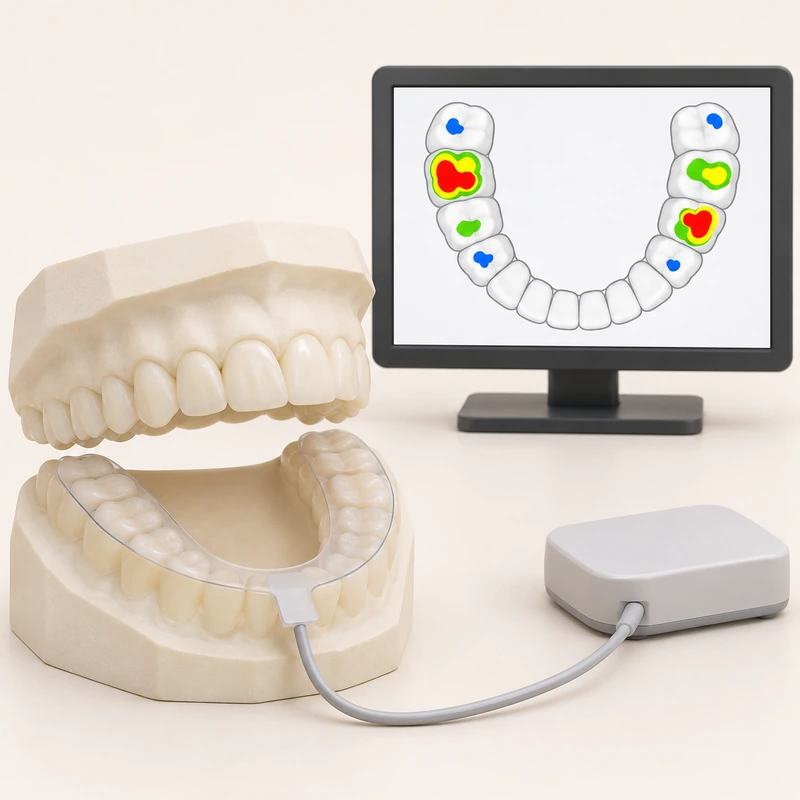
A suitable sensor sits between the dental arches during a supervised bite recording. Software may display contact timing and distribution; the exact measurement depends on the system.
With systems such as T-Scan, percentages represent shares of the recorded load. They cannot be equated with an absolute force in newtons without an appropriate additional measurement basis.
The recording is considered alongside symptoms, examination and other contact checks. A highlighted area alone is not a reason to grind down healthy teeth.
Yes.
No; the measurement method matters.
No; it needs a separate clinical indication.
Three steps. No audio.
Each scene can also be selected manually.

Silent educational film with German on-screen text and simplified teaching images. Not a patient case or a promised treatment outcome. The full English explanation is available as text.
A relative value describes a share within a recording. Absolute force requires a suitable measurement and unit; the two are not interchangeable.
No. A scan mainly records geometry and virtual contacts. Displayed surface proximity is not automatically a measurement of force or contact timing.
No. TMD requires an appropriate clinical assessment. No single widely accepted test identifies all its causes and forms.
Not on the basis of a colour map alone. Recording conditions and clinical findings matter; a universal target number does not justify irreversible bite changes.
You can bring this question to your appointment:
What does this system actually measure, and what treatment decision is supported when the result is combined with my clinical findings?
An individual assessment can clarify the findings and whether referral is needed.
Arrange an assessmentAppointment selection at DoctolibA relative value describes a share within a recording. Absolute force requires a suitable measurement and unit; the two are not interchangeable.
Editorial research: . General information, not an individual diagnosis or treatment recommendation. Teaching illustrations are simplified and do not depict a patient case.
If you turn this on, this website stores which guides you open, separately from advertising preferences. The markers expire after a fixed 30-day period from activation. The list is not sent to us by this feature. You can turn it off here and delete the markers.
Other people using the same browser profile can also see the markers. German and English versions share one marker. Expired entries are removed the next time you open a page with this feature; deleting browser data may remove them earlier. “Viewed” means opened, not read or completed.