A normal structure?
Yes.

The temporomandibular articular disc is a sheet of dense fibrous connective tissue between the mandibular condyle and temporal bone. It divides the joint space into upper and lower compartments and accompanies the condyle during movement. The normal disc is different from disc displacement. A joint sound alone proves neither a displacement requiring treatment nor damage.
For training & practice ↓
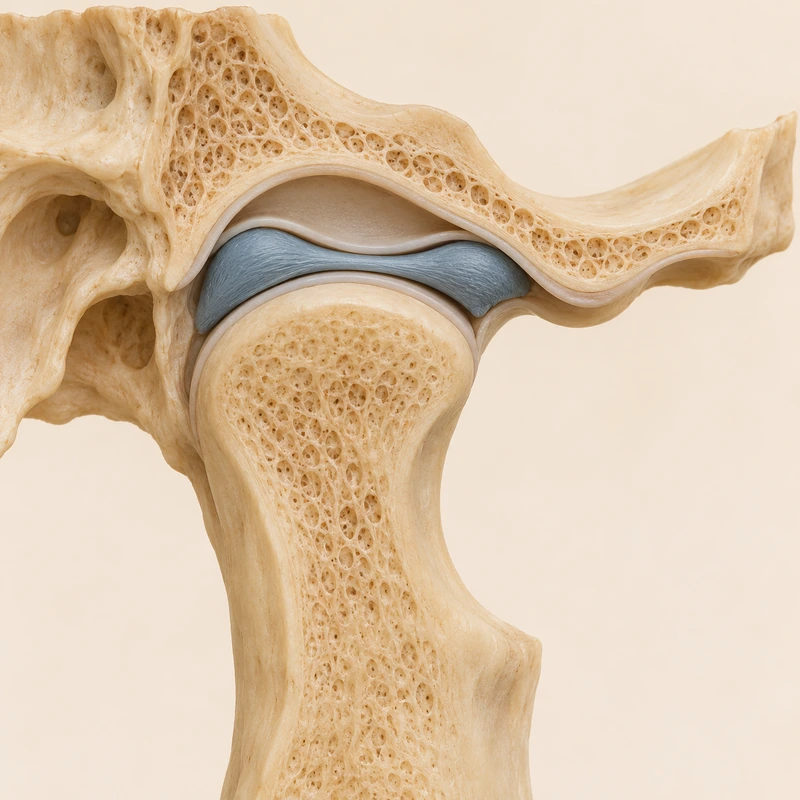
The disc lies between the condyle and temporal bone. It is neither an extra bone nor part of the dental arch.
Separate joint compartments lie above and below the disc. Rotation and gliding combine during mouth opening.
Painless clicking alone usually needs no treatment. Pain, locking or limited movement calls for assessment of the joint as a whole.
Yes.
No.
Usually not if painless.
Three steps. No audio.
Each scene can also be selected manually.

Silent educational film with German on-screen text and simplified teaching images. Not a patient case or a promised treatment outcome. The full English explanation is available as text.
Disc names the joint structure. Disc displacement describes an altered relationship between that structure and the joint surfaces.
No. It consists of firm fibrous connective tissue between the bony joint surfaces.
No. The condyle belongs to the mandibular bone. The disc is a separate structure inside the joint.
The disc has an altered position relative to the other joint structures. That is a specific finding; disc alone simply names the normal structure.
Painless sounds are common and usually need no treatment by themselves. Pain, locking or marked restriction should be assessed.
No. Different examinations assess different tissues. Whether additional imaging, such as MRI, is useful depends on symptoms, examination and the specific clinical question.
You can bring this question to your appointment:
Which symptoms and examination findings suggest that the disc is involved?
A dental examination can clarify how this relates to your findings and treatment planning.
Discuss your dental findingsAppointment selection at DoctolibDisc names the joint structure. Disc displacement describes an altered relationship between that structure and the joint surfaces.
Editorial research: . General information, not an individual diagnosis or treatment recommendation. Teaching illustrations are simplified and do not depict a patient case.
If you turn this on, this website stores which guides you open, separately from advertising preferences. The markers expire after a fixed 30-day period from activation. The list is not sent to us by this feature. You can turn it off here and delete the markers.
Other people using the same browser profile can also see the markers. German and English versions share one marker. Expired entries are removed the next time you open a page with this feature; deleting browser data may remove them earlier. “Viewed” means opened, not read or completed.