When is it seen?
During sideways jaw movement.

Canine guidance is a tooth-contact pattern during sideways movement of the lower jaw. Contact between the opposing canines guides the movement while the back teeth separate. The term describes contacts during movement, not a disease in its own right. Whether an existing pattern should be accommodated or changed during restorative care depends on the overall findings.
For training & practice ↓
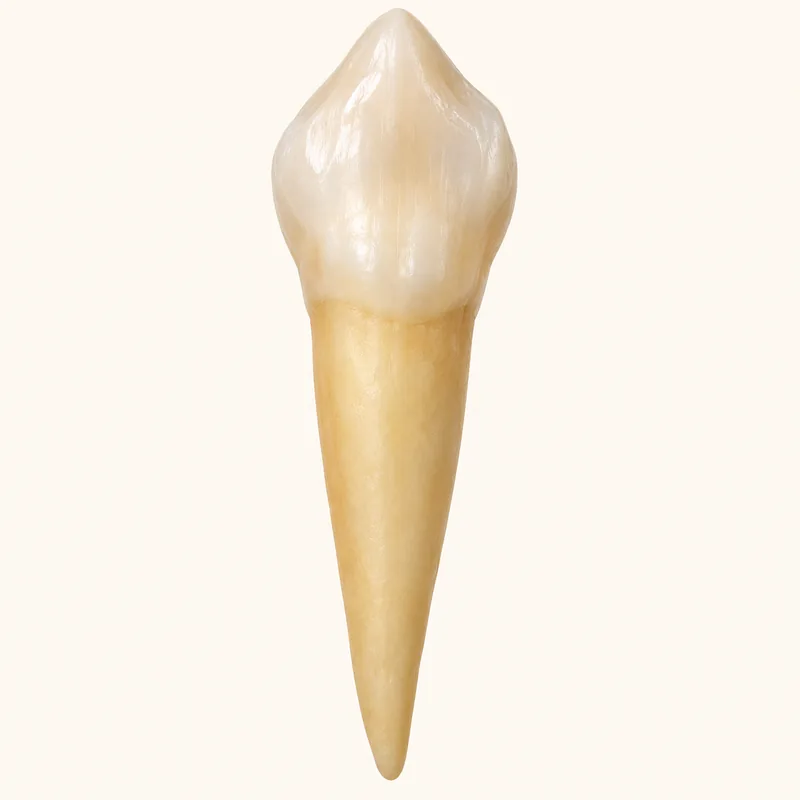
The opposing canines slide against each other during sideways jaw movement while the back teeth separate. A still image of the closed bite does not show this sequence.
In group function, several teeth on the working side stay in contact together. Both patterns occur in natural dentitions.
A contact pattern alone does not explain jaw symptoms. Teeth, restorations, muscles, joints and symptoms are assessed together before a permanent change.
During sideways jaw movement.
They separate in this guidance pattern.
The pattern alone cannot establish that.
Three steps. No audio.
Each scene can also be selected manually.

Silent educational film with German on-screen text and simplified teaching images. Not a patient case or a promised treatment outcome. The full English explanation is available as text.
Canine position describes where the tooth sits. Canine guidance describes which contacts occur during a jaw movement.
No. The term is not a universal quality label. The remaining teeth, their support and the proposed restoration all matter.
The patterns on the right and left may differ. What matters is which contacts occur in the particular movement being assessed.
No. TMD is not diagnosed from this feature alone. People without symptoms can also have other contact patterns.
Irreversible alteration of sound tooth surfaces is not an automatic consequence. The reason, benefits, risks and alternatives need clarification first.
Tooth contacts are examined during jaw movements. Marking materials can reveal contacts but do not replace assessment of the movement and symptoms.
You can bring this question to your appointment:
Which contacts occur during my jaw movements, and how should the planned restoration account for them?
A dental examination can clarify how this relates to your findings and treatment planning.
Discuss your dental findingsAppointment selection at DoctolibCanine position describes where the tooth sits. Canine guidance describes which contacts occur during a jaw movement.
Editorial research: . General information, not an individual diagnosis or treatment recommendation. Teaching illustrations are simplified and do not depict a patient case.
If you turn this on, this website stores which guides you open, separately from advertising preferences. The markers expire after a fixed 30-day period from activation. The list is not sent to us by this feature. You can turn it off here and delete the markers.
Other people using the same browser profile can also see the markers. German and English versions share one marker. Expired entries are removed the next time you open a page with this feature; deleting browser data may remove them earlier. “Viewed” means opened, not read or completed.