Does exposure replace braces?
It provides access. Subsequent tooth movement requires planning.

If a permanent canine is unfavourably positioned beneath the gum or in bone, a surgeon can expose its crown. Depending on its position, a small attachment may be bonded so the orthodontist can guide it gradually into place.
For training & practice ↓
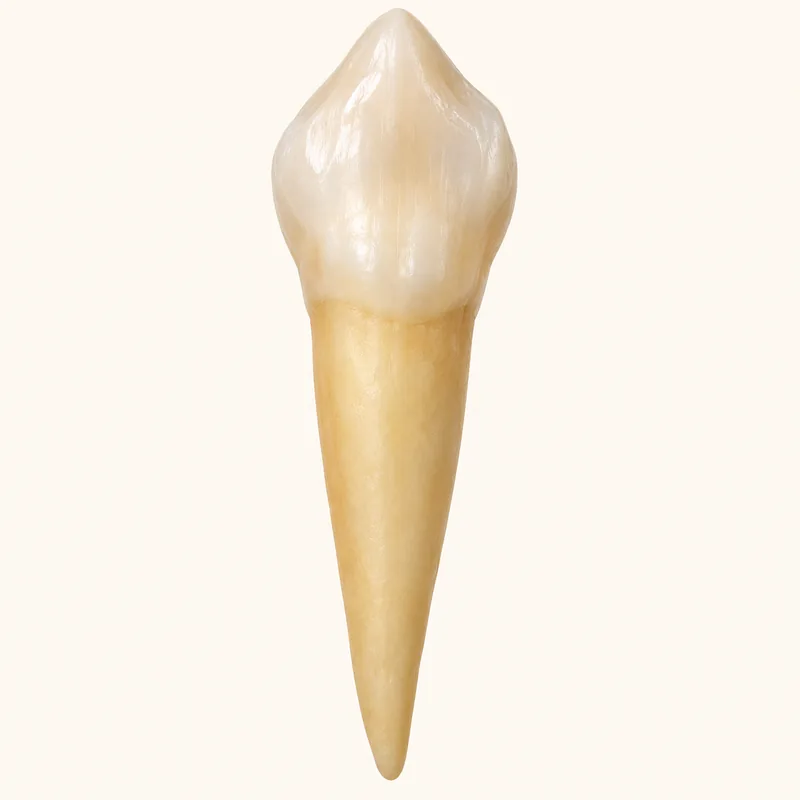
Examination and suitable images show the tooth’s position in relation to the arch and adjacent roots. Space in the arch also matters.
The surgeon creates access to part of the crown. One option is a bonded button or bracket attached to a fine chain.
The brace can apply controlled traction to the canine. Exposure and alignment are separate stages of a coordinated plan.
It provides access. Subsequent tooth movement requires planning.
Other exposure techniques may be chosen depending on the position.
Orthodontic and oral or maxillofacial teams plan together.
Three steps. No audio.
Each scene can also be selected manually.

Silent film with English on-screen text and simplified teaching images.
Exposure provides access while retaining the tooth. Extraction removes it from the jaw.
Orthodontic alignment usually follows and takes time. The duration varies.
Contact your treating team. Do not pull on it or try to glue it back.
The planned path should help protect neighbouring teeth.
Discussing the combined plan
Where is my canine on imaging and what movement is realistic?
An unerupted permanent canine warrants orthodontic assessment.
Choose an appointmentAppointment selection at DoctolibSurgery creates access to the crown. Orthodontic planning determines the intended direction and extent of movement.
Editorial research: . General information, not an individual diagnosis or treatment recommendation. Teaching illustrations are simplified and do not depict a patient case.
If you turn this on, this website stores which guides you open, separately from advertising preferences. The markers expire after a fixed 30-day period from activation. The list is not sent to us by this feature. You can turn it off here and delete the markers.
Other people using the same browser profile can also see the markers. German and English versions share one marker. Expired entries are removed the next time you open a page with this feature; deleting browser data may remove them earlier. “Viewed” means opened, not read or completed.