Is this metal my finished denture?
Bases and replacement teeth are added at later stages.

At a framework try-in, the dentist checks the supporting structure of a restoration in the mouth before it is finished. For a cast partial denture this includes the rests on the natural teeth, the path into place and any interference when the jaws close.
For training & practice ↓
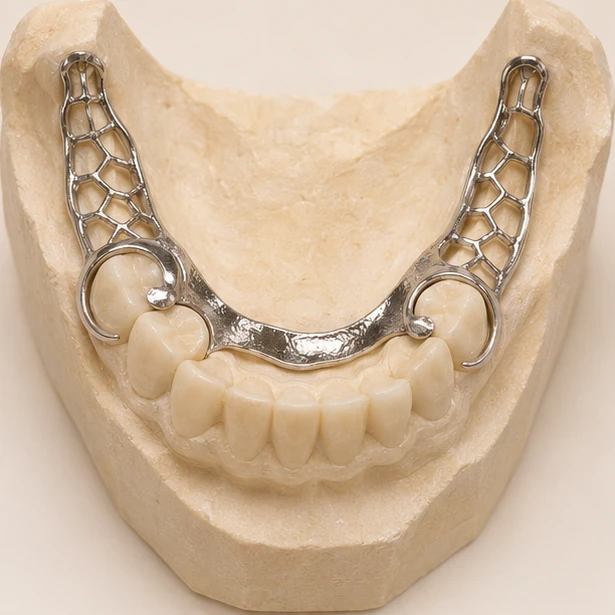
The metal connects the future tooth-bearing areas and supports the denture. Exposed saddle areas give the dentist access to check where parts meet.
Small metal rests should seat in the prepared recesses. If the framework rocks, the dentist looks for the interference or loss of support.
You may be asked to close gently. The jaw relationship can then be recorded or the replacement teeth set up for a later try-in.
Bases and replacement teeth are added at later stages.
Tell the dentist about the resistance so the framework can be seated under control.
Point out which tooth feels pressure and whether your teeth close as usual.
Three steps. No audio.
Each scene can also be selected manually.

Silent film with English on-screen text and simplified teaching images.
Replacement teeth are set in adjustable wax.
Yes. This appointment checks how the supporting part fits. The shade and position of the front teeth and the support for your lips can be assessed once the teeth are in place.
The dentist checks the path of insertion and areas of contact. A small interference can sometimes be adjusted. A larger discrepancy may require a new record or framework.
The actual abutment teeth, gums and opposing teeth all affect the fit. A cast represents only part of this situation.
A question to bring along
Where should my framework obtain support?
If a new restoration presses as it is inserted, point out the spot during the fitting.
Choose a dental appointmentAppointment selection at DoctolibThe clinician assesses support, guidance and retention separately.
Editorial research: . General information, not an individual diagnosis or treatment recommendation. Teaching illustrations are simplified and do not depict a patient case.
If you turn this on, this website stores which guides you open, separately from advertising preferences. The markers expire after a fixed 30-day period from activation. The list is not sent to us by this feature. You can turn it off here and delete the markers.
Other people using the same browser profile can also see the markers. German and English versions share one marker. Expired entries are removed the next time you open a page with this feature; deleting browser data may remove them earlier. “Viewed” means opened, not read or completed.