Which area is covered?
The vulnerable gum margin next to the surfaces being whitened.

A gingival barrier is a temporary protective layer along the gumline. In certain in-office whitening procedures it separates the gums from the gel. A light-cured material is commonly used.
For training & practice ↓
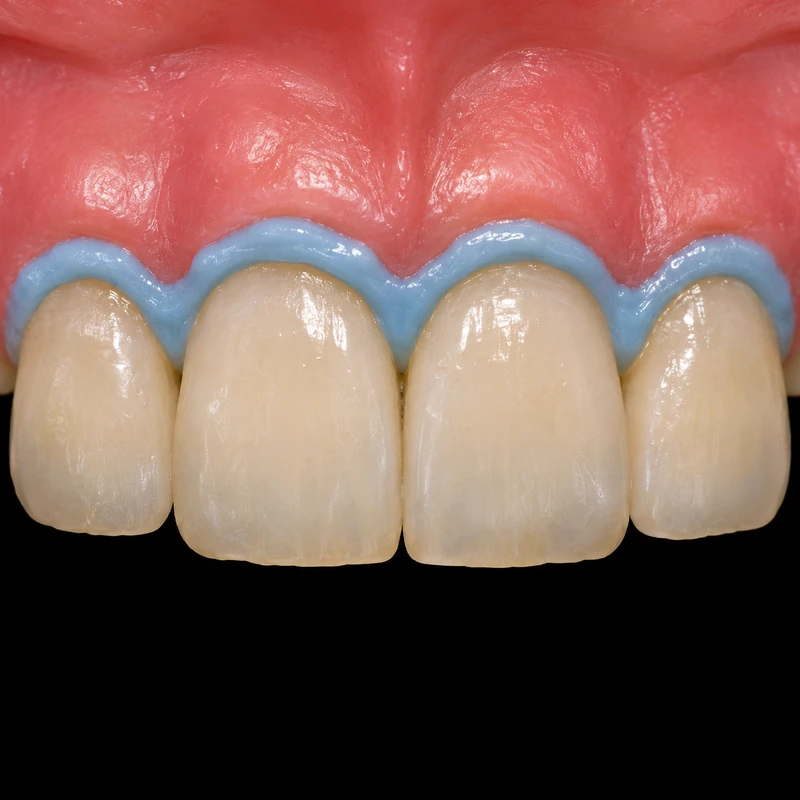
The soft barrier material follows the curved gum margins. The small gum peaks between teeth also need protection.
The team checks the border before applying gel. Exposed soft tissue can react if it comes into contact with the gel.
The team removes the gel and barrier and inspects the gums. Report a burning sensation immediately during treatment.
The vulnerable gum margin next to the surfaces being whitened.
The dental team removes it after treatment.
The colour change comes from the whitening gel applied to the tooth.
Three steps. No audio.
Each scene can also be selected manually.

Silent film with English on-screen text and simplified teaching images.
The barrier covers soft tissue. The gel contains the active ingredient for the tooth. The materials serve different purposes.
For a light-cured barrier, it sets the protective material. This is a separate step before whitening begins.
The barrier protects the gums. Treated teeth may still become temporarily sensitive even if the gums are well covered.
Point out any burning or pain immediately. The team can pause, find the cause and remove any gel.
If you have sensitive gums
How will you protect my exposed tooth necks and gum margins during whitening?
Discuss any existing gum irritation before whitening.
Choose an appointmentAppointment selection at DoctolibA barrier protects neighbouring tissues. A whitening tray holds gel against selected teeth.
Editorial research: . General information, not an individual diagnosis or treatment recommendation. Teaching illustrations are simplified and do not depict a patient case.
If you turn this on, this website stores which guides you open, separately from advertising preferences. The markers expire after a fixed 30-day period from activation. The list is not sent to us by this feature. You can turn it off here and delete the markers.
Other people using the same browser profile can also see the markers. German and English versions share one marker. Expired entries are removed the next time you open a page with this feature; deleting browser data may remove them earlier. “Viewed” means opened, not read or completed.