What is glycine used for?
Mainly professional biofilm removal with compatible devices.

Glycine powder is a cleaning powder based on the amino acid glycine for compatible dental air-polishing devices. It mainly removes soft biofilm; it is not a product for swallowing or self-treatment at home.
For training & practice ↓
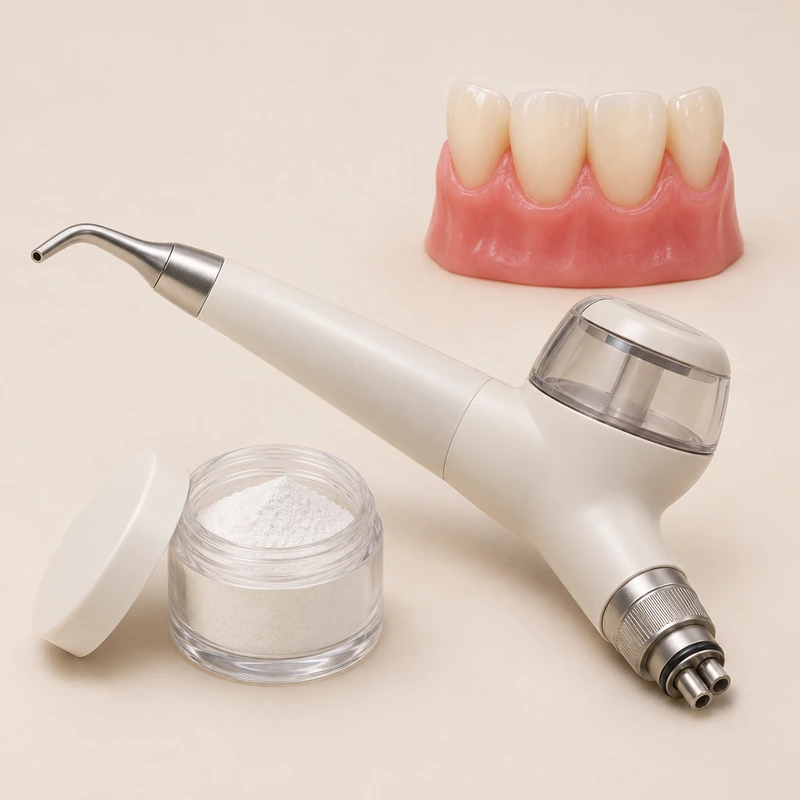
Glycine is the base material of certain powders. Combined with air and water, it can remove deposits from suitable surfaces. The name alone does not establish where a particular product may be used.
Glycine powder is used as a comparatively low-abrasive material. Formulation, device compatibility and application still determine surface exposure. Exposed roots and restorations require appropriate instructions.
Remaining calculus requires other suitable instruments. Glycine studies do not show an additional clinical benefit in every situation. Home care and regular reassessment remain important.
Mainly professional biofilm removal with compatible devices.
No, hard calculus needs suitable instruments.
No, the product and device must be compatible.
Three steps. No audio.
Each scene can also be selected manually.

Silent educational film with German on-screen text and simplified teaching images. Not a patient case or a promised treatment outcome. The full English explanation is available as text.
The cleaning powder is intended for professional device use. Claims about dietary supplements cannot be transferred to dental cleaning.
No. They are different base materials for particular powders. Similar uses do not make them freely interchangeable.
Only with a product and nozzle designed for that use and an appropriate indication. Not every glycine formulation is intended for every site.
No. Lower abrasivity does not mean no abrasion. Application and the treated surface also affect the result.
No. Air polishing can be part of biofilm control. Findings, calculus removal and other necessary treatment remain central.
No. A small trial of adjunctive glycine air polishing found largely similar results with and without it alongside mechanical treatment.
You can bring this question to your appointment:
Why is this powder appropriate for my surfaces and findings?
Discuss which cleaning approach fits your findings.
Discuss dental careAppointment selection at DoctolibThe cleaning powder is intended for professional device use. Claims about dietary supplements cannot be transferred to dental cleaning.
Editorial research: . General information, not an individual diagnosis or treatment recommendation. Teaching illustrations are simplified and do not depict a patient case.
If you turn this on, this website stores which guides you open, separately from advertising preferences. The markers expire after a fixed 30-day period from activation. The list is not sent to us by this feature. You can turn it off here and delete the markers.
Other people using the same browser profile can also see the markers. German and English versions share one marker. Expired entries are removed the next time you open a page with this feature; deleting browser data may remove them earlier. “Viewed” means opened, not read or completed.