What holds the plate in?
Wire clasps engage teeth in the appliance shown.

A removable brace can move selected teeth or influence the way the upper and lower jaws meet. A conventional plate has an acrylic body held against the teeth by clasps. Depending on its design, a spring or an expansion screw supplies the active force.
For training & practice ↓
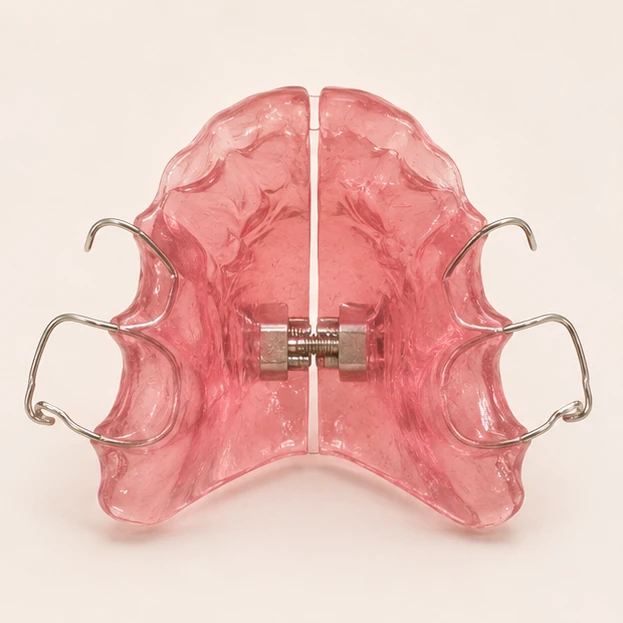
Wire clasps engage selected teeth. The acrylic plate and its wires come out together.
This active plate has an expansion screw. Adjustments follow the individual treatment plan.
A Hawley retainer also comes out. Its purpose is to hold the tooth position after treatment.
Wire clasps engage selected teeth. The acrylic plate and its wires come out together.
This active plate has an expansion screw. Adjustments follow the individual treatment plan.
A Hawley retainer also comes out. Its purpose is to hold the tooth position after treatment.
Wire clasps engage teeth in the appliance shown.
The treating orthodontic team sets it for the device.
Call the practice and take the brace to your appointment.
Three steps. No audio.
Each scene can also be selected manually.

Silent film with English on-screen text and simplified teaching images.
Both come out of the mouth. An active plate applies a planned force. A retainer holds teeth in their corrected position.
A plate can tip teeth in selected cases. Movements that also require precise control of the root may call for a different appliance. The choice depends on how the teeth meet and the movement needed.
Follow the instructions for your particular appliance. Ask about meals, sport and sleep when you receive it. Take the brace out to brush your teeth.
Note where it feels sore and contact the orthodontic practice. Bring the appliance with you. Bending it yourself can change its fit and the direction of the force.
A question to ask
Which movement is this brace meant to produce and how will you check progress?
Contact the treating orthodontic team about a sore spot. A dental appointment is available for a general examination.
Choose an appointmentAppointment selection at DoctolibRemovable describes how an appliance is handled. An active plate moves teeth, while a removable retainer is designed to hold the result.
Editorial research: . General information, not an individual diagnosis or treatment recommendation. Teaching illustrations are simplified and do not depict a patient case.
If you turn this on, this website stores which guides you open, separately from advertising preferences. The markers expire after a fixed 30-day period from activation. The list is not sent to us by this feature. You can turn it off here and delete the markers.
Other people using the same browser profile can also see the markers. German and English versions share one marker. Expired entries are removed the next time you open a page with this feature; deleting browser data may remove them earlier. “Viewed” means opened, not read or completed.