What needs checking first?
The depth of the defect and how much sound structure remains.

In selected teeth a missing or weakened cusp can be rebuilt with tooth-coloured composite. Unlike a small filling, this restoration must recreate part of the load-bearing chewing surface.
For training & practice ↓
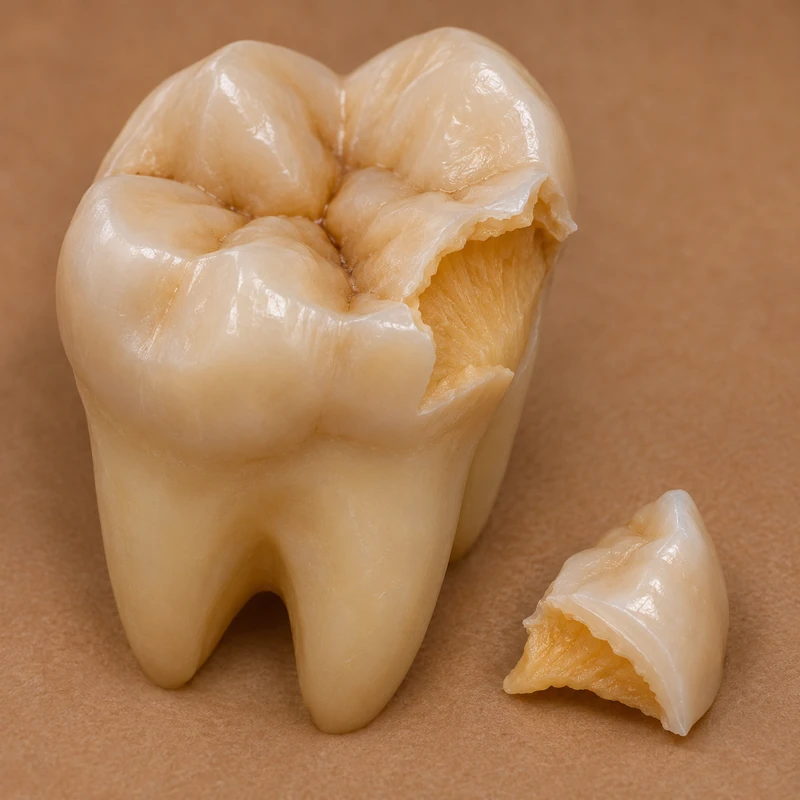
Posterior teeth have raised cusps on their chewing surfaces. Loss of one can change the contour and the contact with the opposing tooth.
In a direct procedure composite is bonded to the tooth and shaped to restore the cusp. The remaining tooth walls influence the design.
The clinician checks the bite and contacts during movement. Cracks, defect size and access to the margin also influence the decision.
The depth of the defect and how much sound structure remains.
The material is shaped in the mouth.
It involved selected premolars with one missing cusp.
Three steps. No audio.
Each scene can also be selected manually.

Silent film with English on-screen text and simplified teaching images.
An inlay fits within the cusps. An indirect restoration that covers one or more cusps is commonly called an onlay.
No. Remaining structure, possible cracks and the condition of the pulp are examined first. An indirect restoration may be more appropriate.
A direct restoration is shaped on the tooth. For an indirect restoration the shape is generally recorded by a scan or impression.
A randomised study found satisfactory short-term results for direct and indirect composite restorations in selected premolars with a missing cusp. It does not predict the lifespan of an individual restoration.
A question to bring along
Which walls still support my tooth and how will the cusp be loaded?
Have a newly fractured cusp assessed promptly and avoid hard loading until then.
Choose an appointmentAppointment selection at DoctolibDirect and indirect describe how the restoration is made. Both can use composite.
Editorial research: . General information, not an individual diagnosis or treatment recommendation. Teaching illustrations are simplified and do not depict a patient case.
If you turn this on, this website stores which guides you open, separately from advertising preferences. The markers expire after a fixed 30-day period from activation. The list is not sent to us by this feature. You can turn it off here and delete the markers.
Other people using the same browser profile can also see the markers. German and English versions share one marker. Expired entries are removed the next time you open a page with this feature; deleting browser data may remove them earlier. “Viewed” means opened, not read or completed.