When is it used?
During a conventional implant impression.

An implant impression coping is a temporary transfer component for a conventional impression. Its indexed connection allows the impression to record the position of the implant or abutment connection for the future restoration.
For training & practice ↓
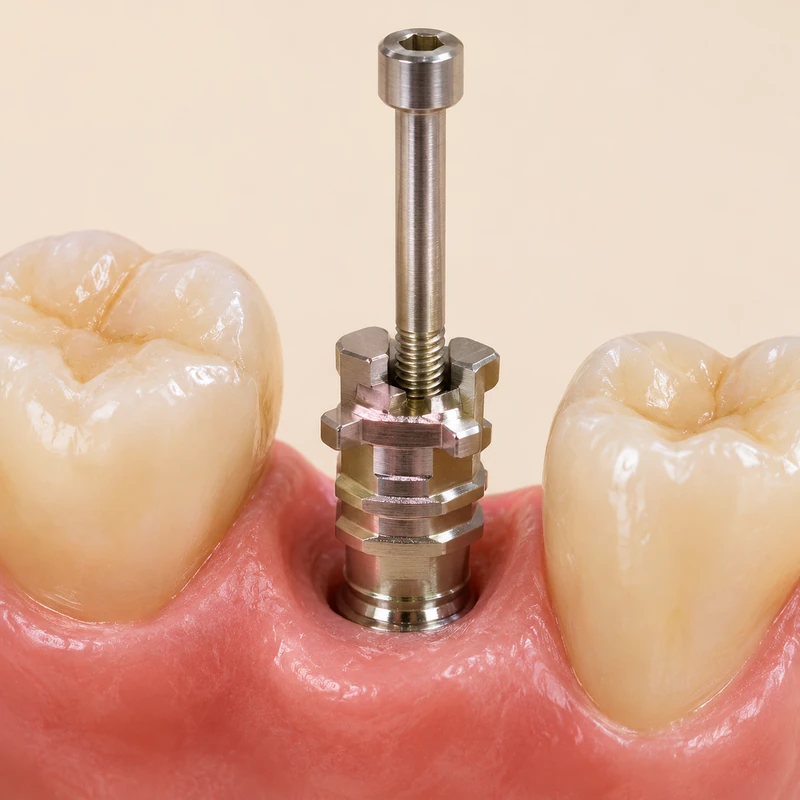
A matching coping temporarily engages the implant or abutment. Its shape provides retention in the impression material.
Material in the tray records the surroundings and the coping's position. The procedure depends on the coping and the tray technique.
In the cast, an analogue represents the connection in the mouth. A scan body serves a related purpose in a digital workflow.
During a conventional implant impression.
Its retentive shape within the set material.
A matching laboratory replica used in the cast.
Three steps. No audio.
Each scene can also be selected manually.

Silent film with English on-screen text and simplified teaching images.
A healing abutment supports soft tissue healing. The impression coping transfers position.
It is removed after the impression. The definitive restoration uses components designed for that purpose.
An opening provides access to the retaining screw. After release the pickup coping comes out with the impression.
In a conventional transfer technique, the coping is detached after the tray is removed and repositioned in its impression. Specific steps depend on the system.
A question to bring along
Will my implant position be recorded using an impression or a scan?
If an impression is planned for an implant crown, you can ask which method will be used.
Choose an appointmentAppointment selection at DoctolibImplant-level and abutment-level impressions record different connection levels.
Editorial research: . General information, not an individual diagnosis or treatment recommendation. Teaching illustrations are simplified and do not depict a patient case.
If you turn this on, this website stores which guides you open, separately from advertising preferences. The markers expire after a fixed 30-day period from activation. The list is not sent to us by this feature. You can turn it off here and delete the markers.
Other people using the same browser profile can also see the markers. German and English versions share one marker. Expired entries are removed the next time you open a page with this feature; deleting browser data may remove them earlier. “Viewed” means opened, not read or completed.