Does the post stay in place?
It is used for scanning and then removed.

An implant scan body is a temporary reference component used for a digital implant impression. A scanner records its known outer shape. Software uses that shape to locate and orient the implant connection in the digital model.
For training & practice ↓
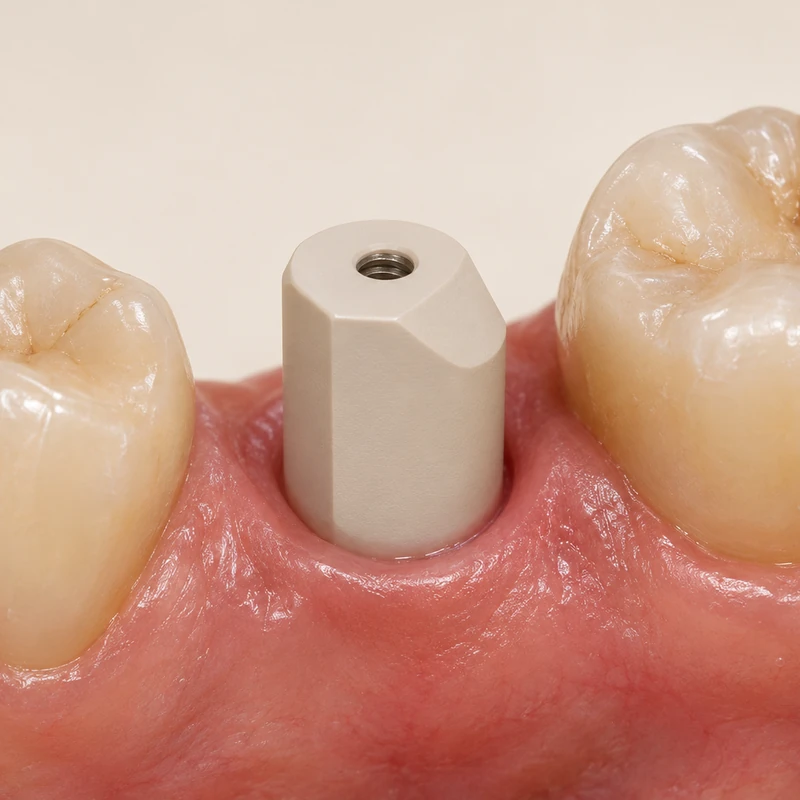
A defined face or edge makes orientation recognisable. The component must match the system and be correctly seated.
The scanner records the visible surface and neighbouring structures. This indirectly locates the implant connection beneath the gum.
The laboratory matches the scanned shape to its digital library component. The final abutment for the crown serves a different purpose.
It is used for scanning and then removed.
The position and orientation of a known implant or abutment interface.
Factors include fit, shape, visibility and correct component matching.
Three steps. No audio.
Each scene can also be selected manually.

Silent film with English on-screen text and simplified teaching images.
The scan body supplies a reference for the digital impression. A healing abutment remains in place for part of healing to shape the soft tissue.
The camera records visible surfaces. The geometry of the attached scan body provides the reference for the implant connection.
Designs vary by system. Distinctive surfaces help the software assign its rotational orientation. A plain round cylinder would give less information.
An impression coping and impression material can also transfer the position. The choice depends on access, number of implants and the restorative workflow.
At a digital implant impression
Which component will go back onto my implant after scanning?
Discuss the next steps towards your final implant crown.
Choose an appointmentAppointment selection at DoctolibA laboratory accuracy study describes a defined experimental setup. Inside the mouth, access and surrounding tissue also affect scanning.
Editorial research: . General information, not an individual diagnosis or treatment recommendation. Teaching illustrations are simplified and do not depict a patient case.
If you turn this on, this website stores which guides you open, separately from advertising preferences. The markers expire after a fixed 30-day period from activation. The list is not sent to us by this feature. You can turn it off here and delete the markers.
Other people using the same browser profile can also see the markers. German and English versions share one marker. Expired entries are removed the next time you open a page with this feature; deleting browser data may remove them earlier. “Viewed” means opened, not read or completed.