What makes the tray custom?
Its shape and extent are designed for the particular jaw.

A custom impression tray is a carrier for impression material shaped for one person's jaw. It provides space for the material. For denture planning, its borders can be adapted to surrounding moving tissues.
For training & practice ↓
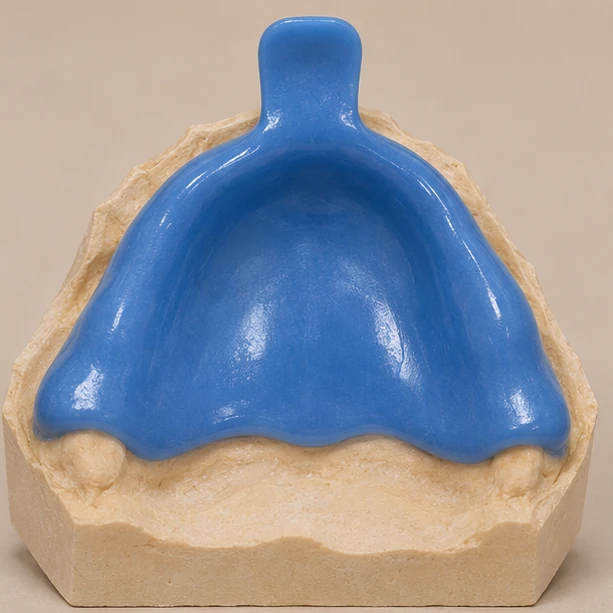
An initial cast or suitable digital records can guide the shape of the tray. The carrier is designed for the individual arch.
Before the impression, the clinician checks seating, extent and clearance for movement. A handle helps position and remove the tray.
The tray holds the impression material. Planning a denture base may require information about the supporting area and its borders next to the lips, cheeks and moving tissues.
Its shape and extent are designed for the particular jaw.
Impression material selected for the planned recording.
It may interfere with movement or dislodge the future base.
Three steps. No audio.
Each scene can also be selected manually.

Silent film with English on-screen text and simplified teaching images.
The tray holds material at an appointment. The finished base carries teeth and contacts the tissues in use.
Often the first records provide the information needed to make the custom tray. The later impression can capture different details of supporting surfaces and borders.
The plastic shown is the impression tool. The denture is made in later stages and has its own base.
During border moulding the clinician may check how far a border can extend while adjacent tissues move. Follow the movements requested for your impression.
A question to bring along
What additional information is the custom-tray impression intended to capture?
A denture consultation can explain whether a custom tray is needed and what it will be used for.
Choose a dental appointmentAppointment selection at DoctolibThe tray is one component of the impression method. Border form, material and clinical handling influence the result.
Editorial research: . General information, not an individual diagnosis or treatment recommendation. Teaching illustrations are simplified and do not depict a patient case.
If you turn this on, this website stores which guides you open, separately from advertising preferences. The markers expire after a fixed 30-day period from activation. The list is not sent to us by this feature. You can turn it off here and delete the markers.
Other people using the same browser profile can also see the markers. German and English versions share one marker. Expired entries are removed the next time you open a page with this feature; deleting browser data may remove them earlier. “Viewed” means opened, not read or completed.