One product?
No, a material group.

Calcium silicate cements are a group of dental materials. Some products are used to protect or preserve living pulp tissue when the clinical situation is suitable. MTA is a well-known example within this group. Material choice alone does not determine success: diagnosis, the procedure and a suitable final seal also matter.
For training & practice ↓
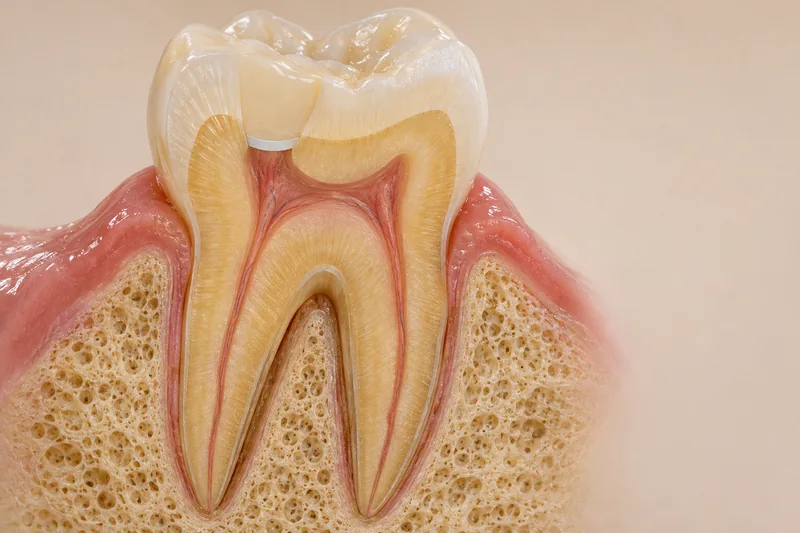
Symptoms, examination findings and indicated imaging are considered before vital pulp treatment. Different situations involving deep decay or exposed pulp do not all call for the same approach.
Calcium silicate cement may be used near pulp tissue in selected procedures. The indication, handling and relationship to the final restoration depend on the findings and the product.
The material is one part of treatment. An appropriate final seal and follow-up remain important. Persistent or new symptoms need reassessment.
No, a material group.
No. Suitability depends on the findings.
No. Follow-up remains important.
Three steps. No audio.
Each scene can also be selected manually.

Silent educational film with German on-screen text and simplified teaching images. Not a patient case or a promised treatment outcome. The full English explanation is available as text.
Calcium silicate cement names a material group. Direct pulp capping and pulpotomy name procedures. The choice of procedure follows the findings, not simply the availability of a material.
Not exactly. MTA is a well-known example within a larger material group. Products can differ in composition, handling and properties.
No. It is used in selected procedures intended to protect or preserve pulp tissue. This does not imply regrowth of a complete tooth or a guaranteed outcome.
That cannot be promised. Whether pulp tissue can be retained depends on the findings and other factors. A different treatment may be needed later even after vital pulp treatment.
Discoloration potential depends on the formulation. Selecting an appropriate material is especially relevant in visible teeth. Ask which product is planned and why.
You can bring this question to your appointment:
Is vital pulp treatment an option for this tooth, and why is this material being considered?
After examining a tooth with deep decay, we can discuss the options for preserving it.
Arrange an assessmentAppointment selection at DoctolibCalcium silicate cement names a material group. Direct pulp capping and pulpotomy name procedures. The choice of procedure follows the findings, not simply the availability of a material.
Editorial research: . General information, not an individual diagnosis or treatment recommendation. Teaching illustrations are simplified and do not depict a patient case.