Why isn’t any visible gap sufficient?
The size and shape of the replacement should suit the arch. Root positions can also matter. The orthodontic and restorative teams agree on the intended positions.

Orthodontic space opening moves neighbouring teeth to create room for a planned replacement. For example, if an upper lateral incisor is missing, adjacent teeth may have drifted into the original space.
For training & practice ↓
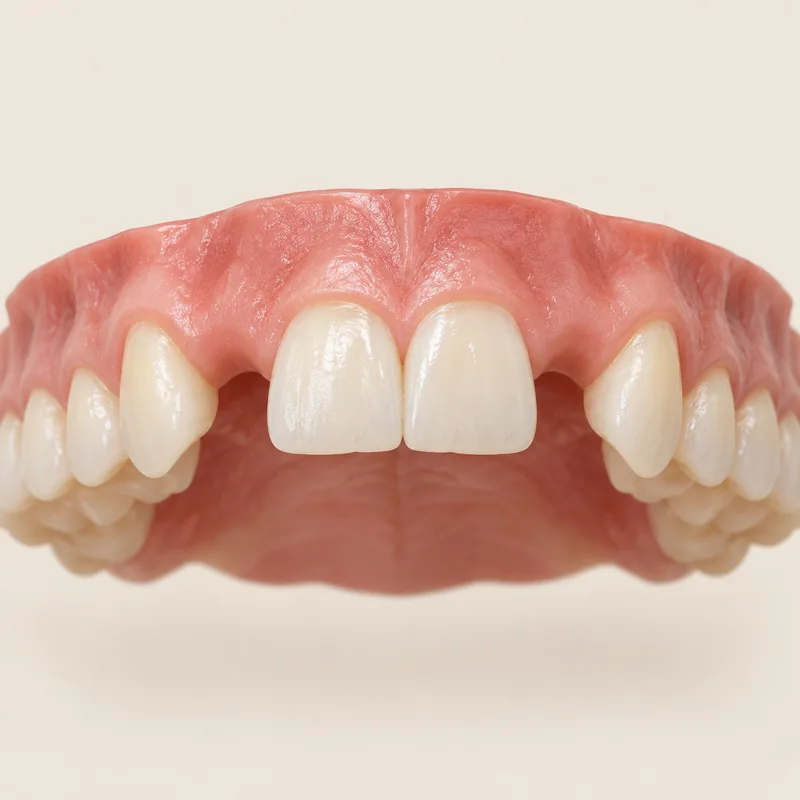
Spaces in the front of this model illustrate where a tooth might later be replaced.
The roots of adjacent teeth matter to planning. They are hidden in a front view.
The model illustrates a bridge pontic. Restoration of an anterior space requires its own plan.
Spaces in the front of this model illustrate where a tooth might later be replaced.
The roots of adjacent teeth matter to planning. They are hidden in a front view.
The model illustrates a bridge pontic. Restoration of an anterior space requires its own plan.
The size and shape of the replacement should suit the arch. Root positions can also matter. The orthodontic and restorative teams agree on the intended positions.
A bonded bridge or another restoration may be planned. Depending on the bite, age, adjacent teeth and preferences, closing the space may also be possible. Discuss the restorative plan before moving the teeth.
The planned space often needs temporary retention. Ask who will check the retainer and when the next treatment step is expected.
Three steps. No audio.
Each scene can also be selected manually.

Silent film with English on-screen text and simplified teaching images.
Opening creates room for a replacement. Closing moves neighbouring teeth into the site, sometimes with subsequent reshaping.
The size and shape of the replacement should suit the arch. Root positions can also matter. The orthodontic and restorative teams agree on the intended positions.
A bonded bridge or another restoration may be planned. Depending on the bite, age, adjacent teeth and preferences, closing the space may also be possible. Discuss the restorative plan before moving the teeth.
The planned space often needs temporary retention. Ask who will check the retainer and when the next treatment step is expected.
A question to ask
What replacement determines the target space and how will it be held until then?
Bring the orthodontic plan when discussing a possible replacement.
Choose an appointmentAppointment selection at DoctolibSpace between crowns and space between roots are distinct considerations for a planned replacement.
Editorial research: . General information, not an individual diagnosis or treatment recommendation. Teaching illustrations are simplified and do not depict a patient case.
If you turn this on, this website stores which guides you open, separately from advertising preferences. The markers expire after a fixed 30-day period from activation. The list is not sent to us by this feature. You can turn it off here and delete the markers.
Other people using the same browser profile can also see the markers. German and English versions share one marker. Expired entries are removed the next time you open a page with this feature; deleting browser data may remove them earlier. “Viewed” means opened, not read or completed.