Which tooth takes the place?
The adjacent natural upper canine.

In canine substitution an upper canine is moved orthodontically into the space of a missing lateral incisor. Its visible shape and sometimes its colour are adjusted to suit the adjacent teeth. The first premolar can then occupy the former canine position.
For training & practice ↓
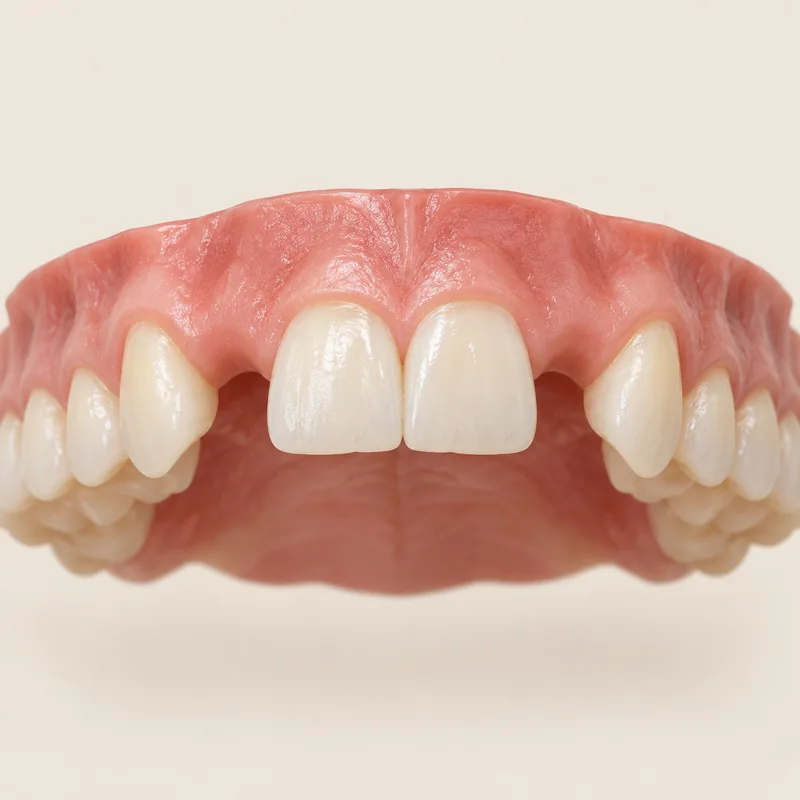
If an upper lateral incisor never develops, the space can be maintained for a future replacement or closed with natural teeth. Plans differ when one or both sides are affected.
Canines have a prominent cusp and are often broader or darker. Tooth position, gum contours and possible reshaping are considered before the space is closed.
The premolar behind the canine takes on a new position in the arch. Contacts on closing and moving the jaw sideways are assessed across the dentition.
The adjacent natural upper canine.
A canine may differ in shade from the incisors.
Checking contacts, tooth shape and how the position will be retained.
Three steps. No audio.
Each scene can also be selected manually.

Silent film with English on-screen text and simplified teaching images.
That involves surgically relocating a tooth. Substitution moves the canine within the jaw using orthodontic forces.
When natural teeth fully close the space, no artificial tooth is placed there. The team first assesses whether closure suits your bite and facial features.
Reshaping is individual. Limited enamel recontouring or adding composite can help. Tooth width and available enamel influence what is appropriate.
A follow-up of selected patients found generally healthy supporting tissues after space closure. It does not determine the right option for everyone. Bite, tissues and stability need individual review.
A question to bring along
How would my canine's shape, colour and gum height suit the neighbouring central incisor?
A consultation for missing lateral incisors can compare both options and their implications for adjacent teeth.
Choose a dental appointmentAppointment selection at DoctolibSpace closure and an appropriate visible tooth shape are distinct planning goals.
Editorial research: . General information, not an individual diagnosis or treatment recommendation. Teaching illustrations are simplified and do not depict a patient case.
If you turn this on, this website stores which guides you open, separately from advertising preferences. The markers expire after a fixed 30-day period from activation. The list is not sent to us by this feature. You can turn it off here and delete the markers.
Other people using the same browser profile can also see the markers. German and English versions share one marker. Expired entries are removed the next time you open a page with this feature; deleting browser data may remove them earlier. “Viewed” means opened, not read or completed.