Who may find this relevant?
People who previously had braces or aligners and notice a new change in tooth position.

Orthodontic relapse is a renewed change in tooth position after orthodontic correction, particularly towards a former position. Teeth can also change throughout life. A later shift therefore does not automatically prove that the earlier treatment was faulty.
For training & practice ↓
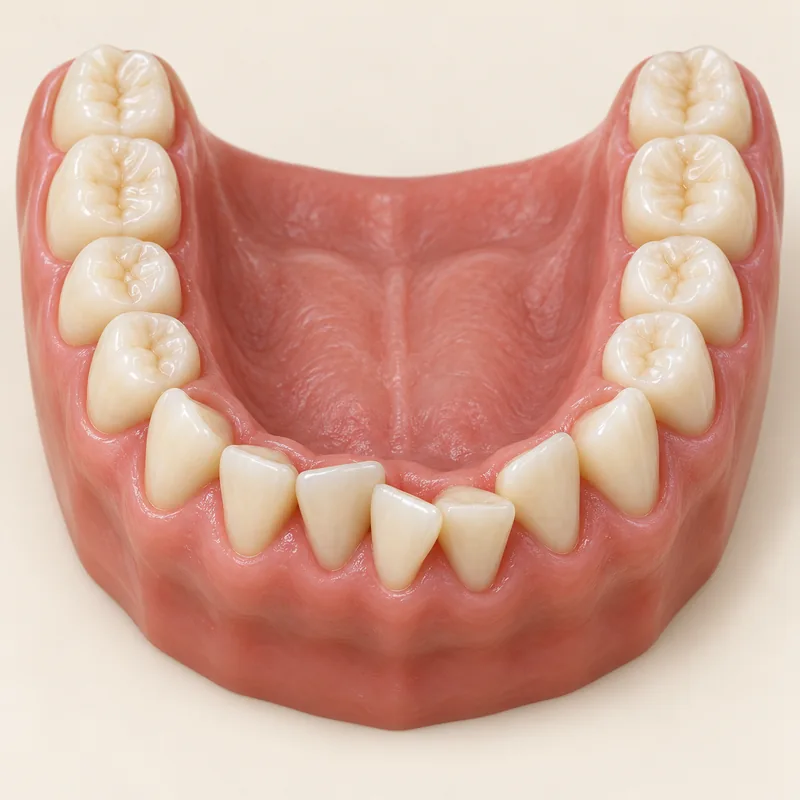
After correction, the surrounding tissues need to adapt. Later changes can also influence tooth position.
A fixed or removable retainer is intended to maintain the achieved position. Wear, cleaning and reviews are agreed individually.
Contact the treating practice if a retainer loosens, a tray no longer fits or teeth visibly shift. Do not force old trays into place or reshape them yourself.
People who previously had braces or aligners and notice a new change in tooth position.
Current position, bite, retainer and the condition of teeth and gums.
Individually discussed options for stabilisation or correction, if needed.
Three steps. No audio.
Each scene can also be selected manually.

Silent educational film with German on-screen text and simplified teaching images. Not a patient case or a promised treatment outcome. The full English explanation is available below.
After correction, the surrounding tissues need to adapt. Later changes can also influence tooth position.
A fixed or removable retainer is intended to maintain the achieved position. Wear, cleaning and reviews are agreed individually.
Contact the treating practice if a retainer loosens, a tray no longer fits or teeth visibly shift. Do not force old trays into place or reshape them yourself.
Relapse describes a renewed change after correction. Refinement is an additional planned correction phase within aligner treatment.
Yes. A retainer may be damaged or no longer working adequately; other causes are also possible. The actual situation needs examination.
No. Tooth position, bite, retainer and oral health are assessed first. Whether further correction is appropriate follows from that assessment.
Its main role is to preserve the achieved position. It should not be used independently as a device to correct teeth back into place.
An editorially suggested question for a conversation with Dr. med. dent. Niusha Barahmand Pour:
Is this relapse, and what role does my existing retainer play?
Previously straight teeth shifting again? An examination provides the basis for the next steps.
Discuss teeth shifting againAppointment selection at DoctolibRelapse describes a renewed change after correction. Refinement is an additional planned correction phase within aligner treatment.
Editorial research: . General information, not an individual diagnosis or treatment recommendation. Teaching illustrations are simplified and do not depict a patient case.