Where is it?
Inside the cheek at the biting level.

Oral linea alba is a whitish line on the inner cheek, usually where the upper and lower teeth meet. It is associated with repeated mechanical contact, pressure or cheek sucking. A typical linea alba confirmed on examination is benign and often symptom-free. Not every white oral lesion fits this description.
For training & practice ↓
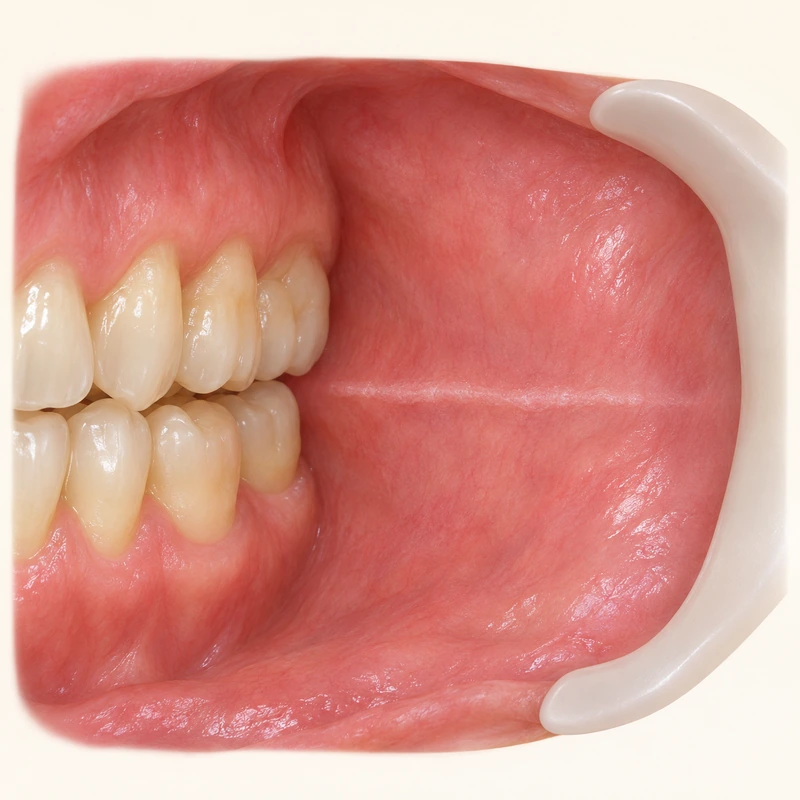
The whitish line follows the inner cheek roughly where upper and lower teeth meet. It may affect one or both sides and is often noticed incidentally.
Cheek sucking or repeated tooth contact can alter the surface. This often happens without awareness. Examination also considers other causes of white patches.
A confirmed, symptom-free linea alba usually needs no treatment. Pain, ulceration or a noticeable change should prompt reassessment.
Inside the cheek at the biting level.
No. It is not an infection.
Usually not if the finding is confirmed and symptom-free.
Three steps. No audio.
Each scene can also be selected manually.

Silent educational film with German on-screen text and simplified teaching images. Not a patient case or a promised treatment outcome. The full English explanation is available as text.
Linea alba is a relatively narrow line at the biting level. Morsicatio buccarum results from repetitive cheek chewing and often has a ragged surface. They can coexist but are not identical.
A confidently diagnosed typical linea alba is benign. This does not mean every white line or patch is harmless. Uncertain, growing, red or ulcerated areas need examination.
No. Mechanical cheek contact can occur in various circumstances. The line alone neither diagnoses bruxism nor establishes when a habit occurs.
Not automatically. Linea alba alone does not justify an occlusal splint. Symptoms, possible habits and other clinical findings need to be considered first.
No. It reflects an altered mucosal surface, not trapped food that needs removal. Manipulation can add irritation.
You can bring this question to your appointment:
Is this a typical linea alba, and is there an irritating habit or another finding we should consider?
An individual examination can clarify the findings and suitable next steps.
Arrange an assessmentAppointment selection at DoctolibLinea alba is a relatively narrow line at the biting level. Morsicatio buccarum results from repetitive cheek chewing and often has a ragged surface. They can coexist but are not identical.
Editorial research: . General information, not an individual diagnosis or treatment recommendation. Teaching illustrations are simplified and do not depict a patient case.
If you turn this on, this website stores which guides you open, separately from advertising preferences. The markers expire after a fixed 30-day period from activation. The list is not sent to us by this feature. You can turn it off here and delete the markers.
Other people using the same browser profile can also see the markers. German and English versions share one marker. Expired entries are removed the next time you open a page with this feature; deleting browser data may remove them earlier. “Viewed” means opened, not read or completed.