Is one thickness right for everything?
Permitted thickness is material-specific.

In incremental layering the clinician places composite in separate portions and cures each with light. This allows control of shape and curing according to the properties of the material.
For training & practice ↓
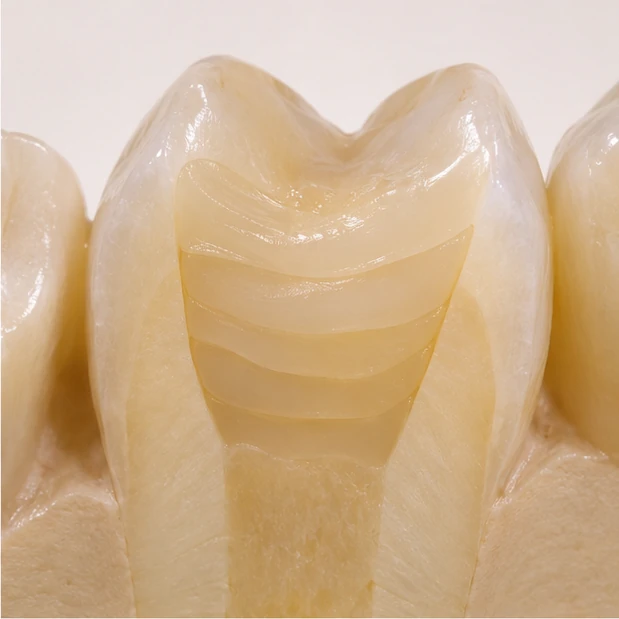
The walls of a posterior cavity may differ considerably in height. Smaller portions can be adapted to the floor and walls.
Light must reach the individual portion adequately. Permitted thickness and required exposure depend on the composite, shade, equipment and instructions.
The last increment forms the chewing surface or visible contour. The clinician checks contour and contacts and polishes the surface.
Permitted thickness is material-specific.
The material must be designed for that use.
Layer count alone cannot predict longevity.
Three steps. No audio.
Each scene can also be selected manually.

Silent film with English on-screen text and simplified teaching images.
Different shades can reproduce a natural appearance. A single shade can still be placed in several increments.
No. Materials differ in permitted increment thickness. Product instructions and access for the light matter.
These composites are designed for larger increments within stated limits. Some flowable versions need a separate load-bearing surface layer.
A six-year randomised study found similar failure rates for the two material approaches tested in posterior restorations. The finding applies to those specific protocols.
A question to bring along
Which material suits the depth and loading of my cavity?
The dental team can explain how the planned filling is built and checked.
Choose an appointmentAppointment selection at DoctolibA direct composite can be layered without using different shades.
Editorial research: . General information, not an individual diagnosis or treatment recommendation. Teaching illustrations are simplified and do not depict a patient case.
If you turn this on, this website stores which guides you open, separately from advertising preferences. The markers expire after a fixed 30-day period from activation. The list is not sent to us by this feature. You can turn it off here and delete the markers.
Other people using the same browser profile can also see the markers. German and English versions share one marker. Expired entries are removed the next time you open a page with this feature; deleting browser data may remove them earlier. “Viewed” means opened, not read or completed.