Who may find this relevant?
People with early changes, defects or questions about existing fillings.

Minimally invasive dentistry aims to preserve healthy tooth tissue and intervene only as far as the findings require. In caries care, it sits alongside early detection, prevention, reviews and suitable conservative treatments. It means neither “always without drilling” nor one technique for every tooth.
For training & practice ↓
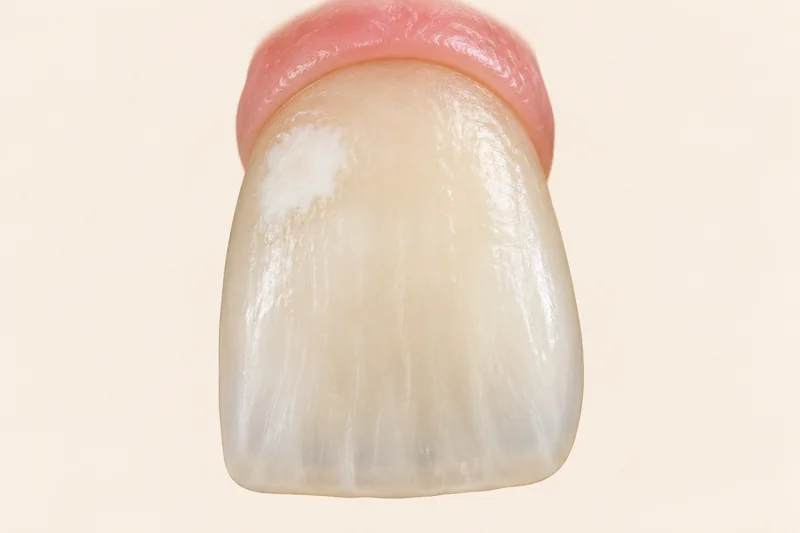
Early mineral change with an intact surface differs from a cavitated defect. Depth, activity and individual decay risk help determine the necessary intervention.
Suitable findings may be managed through prevention, sealing or infiltration. Some existing fillings with a localised defect can be repaired rather than entirely replaced.
Conservative care does not mean ignoring symptoms or progression. Advanced damage may require a filling or further treatment. Monitoring and home care remain part of the plan.
People with early changes, defects or questions about existing fillings.
Disease control, preservation of tissue and a functioning restoration.
Agreed reviews and home care; seek earlier advice for new pain or swelling.
Three steps. No audio.
Each scene can also be selected manually.

Silent educational film with German on-screen text and simplified teaching images. Not a patient case or a promised treatment outcome. The full English explanation is available below.
Early mineral change with an intact surface differs from a cavitated defect. Depth, activity and individual decay risk help determine the necessary intervention.
Suitable findings may be managed through prevention, sealing or infiltration. Some existing fillings with a localised defect can be repaired rather than entirely replaced.
Conservative care does not mean ignoring symptoms or progression. Advanced damage may require a filling or further treatment. Monitoring and home care remain part of the plan.
A limited intervention may be appropriate. Monitoring is a care plan only when suitable prevention, agreed reviews and criteria for further action are included.
No. It describes limiting intervention in tissue. Prevention and management of discomfort need their own plan.
No. Surface integrity, depth and activity matter. Minerals cannot simply recreate the original shape of a sizeable established defect.
Not always. Repair is an option when condition and access allow it. More extensive tooth damage or an inadequate restoration may need a different plan.
An editorially suggested question for a discussion with Dr med dent Niusha Barahmand Pour:
Which parts of the tooth can be preserved, and why does this treatment scope fit my findings?
Before treatment, ask which tissue can be preserved and which steps are necessary. The answer should relate to your findings.
Discuss the scope of treatmentAppointment selection at DoctolibA limited intervention may be appropriate. Monitoring is a care plan only when suitable prevention, agreed reviews and criteria for further action are included.
Editorial research: . General information, not an individual diagnosis or treatment recommendation. Teaching illustrations are simplified and do not depict a patient case.