Always a problem?
No; the overall finding matters.

A dental midline discrepancy means that the upper and lower dental midlines do not align, or a dental midline differs from the facial midline. Tooth positions, a sideways shift on closing or jaw position may contribute.
For training & practice ↓
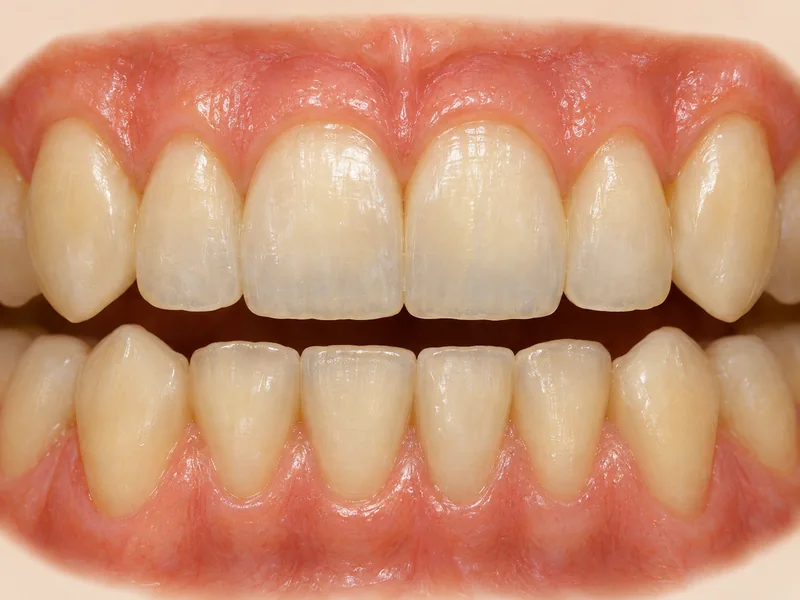
The line between the two central incisors is a reference. Upper and lower dental midlines are assessed together with facial relationships.
The discrepancy may arise within the dental arch or relate to jaw position. The lower jaw can also shift sideways during closure.
An apparent deviation alone does not determine treatment. Cause, bite, development and the person’s priorities matter.
No; the overall finding matters.
No; the bite must also be examined.
Their midlines are compared separately.
Three steps. No audio.
Each scene can also be selected manually.

Silent educational film with German on-screen text and simplified teaching images. Not a patient case or a promised treatment outcome. The full English explanation is available as text.
A dental midline discrepancy is not automatically a skeletal jaw asymmetry. Tooth position and skeletal or functional jaw relationships are assessed separately.
No. Small asymmetries can exist without important impairment. The whole clinical finding determines whether treatment is appropriate.
Uneven space loss or tooth movement can contribute, but an off-centre midline does not always have the same cause.
Whether correction is appropriate and which appliance may be suitable depends on the cause and extent. A photograph alone is insufficient.
You can bring this question to your appointment:
Is the discrepancy related to tooth position, closure or jaw relationships?
An examination can clarify the finding and any need for referral.
Arrange an assessmentAppointment selection at DoctolibA dental midline discrepancy is not automatically a skeletal jaw asymmetry. Tooth position and skeletal or functional jaw relationships are assessed separately.
Editorial research: . General information, not an individual diagnosis or treatment recommendation. Teaching illustrations are simplified and do not depict a patient case.