Where does it sit?
Between lips/cheeks and teeth.

An oral screen is a removable shield that sits between the lips or cheeks and the dental arches. It may be used for selected lip-function problems or as part of supervised oral function therapy. Its shape, size and use need professional selection. It does not clear a blocked nose or correct every tooth or jaw problem.
For training & practice ↓
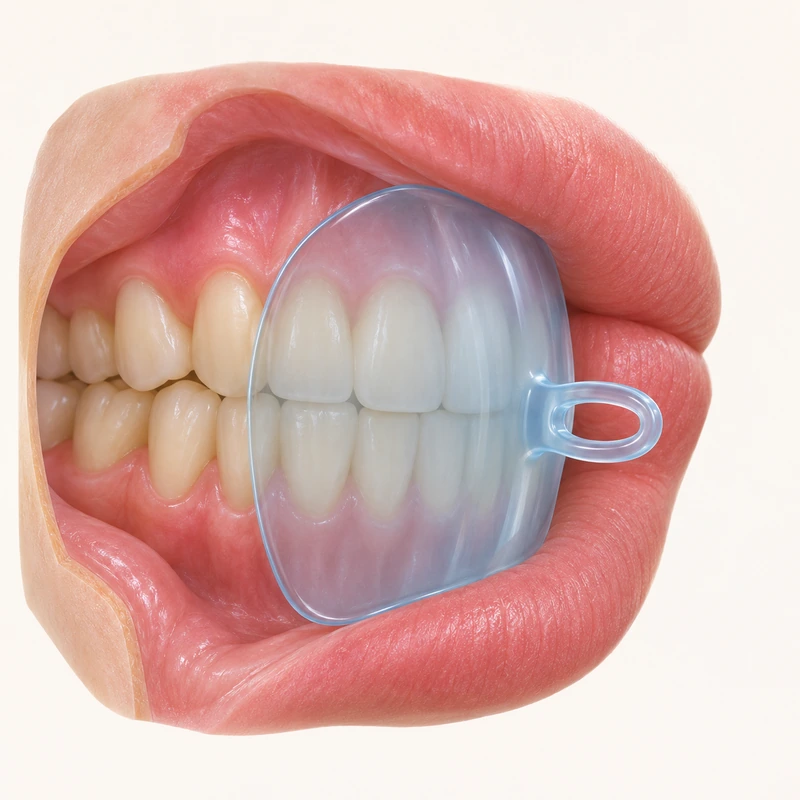
The shield sits in the oral vestibule, in front of the teeth and behind the lips. Unlike a bite splint, it does not cover the chewing surfaces.
Supervised use may target lip closure. Greater measured lip force does not automatically mean better breathing or permanently straight teeth.
If nasal breathing is obstructed, the cause needs assessment first. An appliance should not be used to force a person to stop necessary mouth breathing.
Between lips/cheeks and teeth.
No.
Yes; obstruction needs assessment.
Three steps. No audio.
Each scene can also be selected manually.

Silent educational film with German on-screen text and simplified teaching images. Not a patient case or a promised treatment outcome. The full English explanation is available as text.
The screen is a tool. Myofunctional therapy is a supervised treatment approach that may also be provided without this device.
Not generally. A small study found selected tooth-position changes, but not general jaw correction. The individual findings determine its purpose.
No. Airway function, ability to follow instructions, oral function and fit all matter. Choosing a screen and pulling on it without guidance is not an individual treatment plan.
Discuss use with the treating team and have the fit checked. Do not cut it down or add components yourself.
You can bring this question to your appointment:
What specific function is the screen intended to improve, and has nasal breathing been assessed?
An individual assessment can clarify the findings and whether referral is needed.
Arrange an assessmentAppointment selection at DoctolibThe screen is a tool. Myofunctional therapy is a supervised treatment approach that may also be provided without this device.
Editorial research: . General information, not an individual diagnosis or treatment recommendation. Teaching illustrations are simplified and do not depict a patient case.
If you turn this on, this website stores which guides you open, separately from advertising preferences. The markers expire after a fixed 30-day period from activation. The list is not sent to us by this feature. You can turn it off here and delete the markers.
Other people using the same browser profile can also see the markers. German and English versions share one marker. Expired entries are removed the next time you open a page with this feature; deleting browser data may remove them earlier. “Viewed” means opened, not read or completed.