Main mechanism?
Repeated heat exposure.

Nicotine stomatitis, also called smoker’s palate, is a change in the palatal lining caused mainly by repeated heat exposure, often associated with smoking. The name does not mean nicotine allergy. Pale palatal changes and conspicuous salivary duct openings need professional assessment; they do not provide a reliable basis for self-diagnosis.
For training & practice ↓
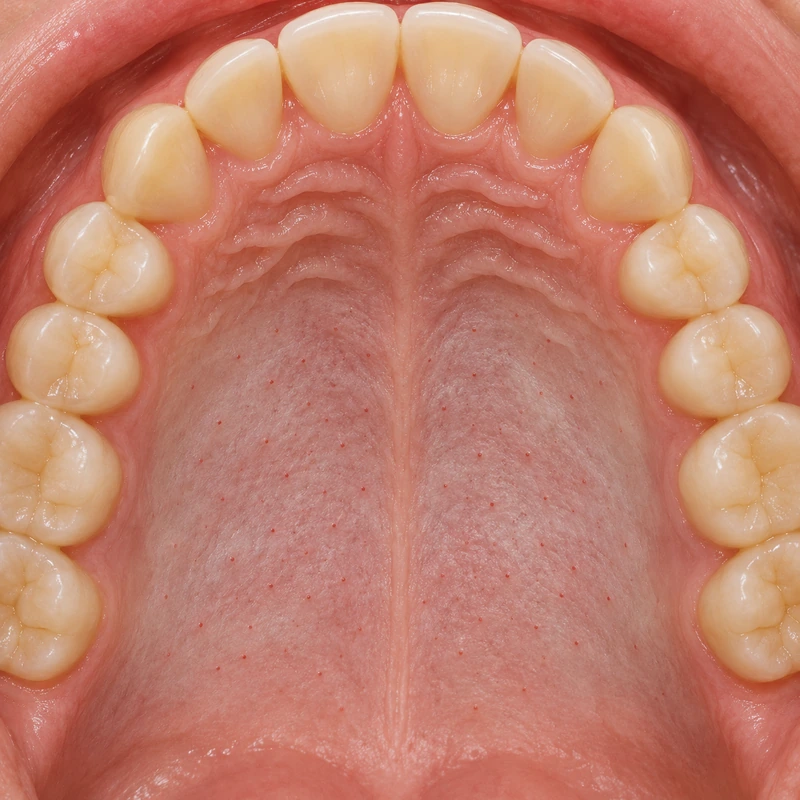
Prolonged heat exposure can change the mucosal surface. The term smoker’s palate describes this association, rather than every white patch in the mouth.
Small red dots may represent inflamed openings of minor salivary glands. Unexplained or suspicious areas need examination and sometimes a tissue sample.
Stopping smoking is the key measure. Persistent changes need reassessment. Improvement of the palate does not remove the wider oral-cancer risk associated with tobacco.
Repeated heat exposure.
No.
Professional review and further investigation when needed.
Three steps. No audio.
Each scene can also be selected manually.

Silent educational film with German on-screen text and simplified teaching images. Not a patient case or a promised treatment outcome. The full English explanation is available as text.
Nicotine stomatitis describes a particular, usually heat-related palatal reaction. Leukoplakia is a differently defined white mucosal lesion after other causes have been excluded. Professional assessment distinguishes them.
A professionally identified typical nicotine stomatitis is not equivalent to cancer. Other tobacco-related lesions can coexist. Reverse smoking is an important exception requiring a different risk assessment.
No. The altered tissue is not an ordinary food deposit or tongue coating. Do not scrub it; have unexplained white patches examined.
Yes. These changes may cause no symptoms. Absence of pain does not establish the cause or prove safety; persistent or suspicious findings need assessment.
You can bring this question to your appointment:
Has the palatal finding been clearly identified, and when should it be reviewed after smoking cessation?
An individual examination can clarify the findings and suitable next steps.
Arrange an assessmentAppointment selection at DoctolibNicotine stomatitis describes a particular, usually heat-related palatal reaction. Leukoplakia is a differently defined white mucosal lesion after other causes have been excluded. Professional assessment distinguishes them.
Editorial research: . General information, not an individual diagnosis or treatment recommendation. Teaching illustrations are simplified and do not depict a patient case.
If you turn this on, this website stores which guides you open, separately from advertising preferences. The markers expire after a fixed 30-day period from activation. The list is not sent to us by this feature. You can turn it off here and delete the markers.
Other people using the same browser profile can also see the markers. German and English versions share one marker. Expired entries are removed the next time you open a page with this feature; deleting browser data may remove them earlier. “Viewed” means opened, not read or completed.