Which parts are normally kept?
The artificial teeth and their arrangement.

In a denture rebase, the laboratory replaces the denture base while retaining suitable existing denture teeth and their arrangement. The dentist first assesses whether the tooth position, bite, condition of the teeth and oral tissues make this a reasonable option.
For training & practice ↓
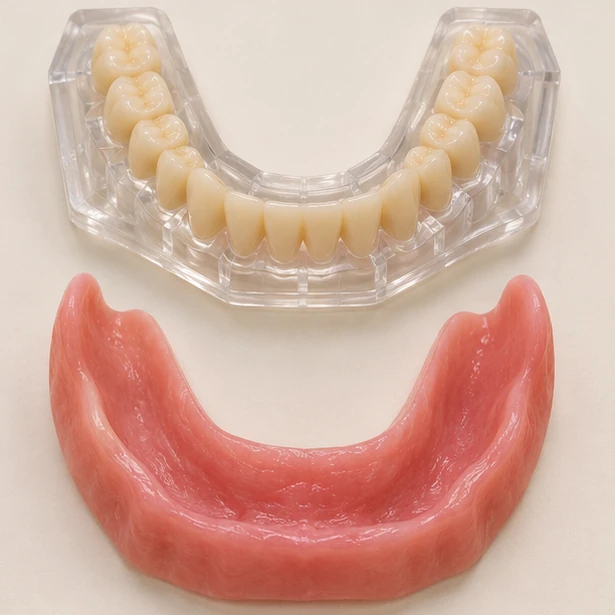
The team checks wear, arrangement and bite. Heavily worn teeth or poorly positioned teeth influence the decision.
An index can hold the artificial teeth in their existing arrangement while the base material is replaced.
The new base should correspond to the current shape of the mouth. Fit, borders and bite contacts are checked when it is returned.
The artificial teeth and their arrangement.
The retained tooth surfaces keep their existing shape.
Pressure spots, borders and contact with the opposing teeth are among the checks.
Three steps. No audio.
Each scene can also be selected manually.

Silent film with English on-screen text and simplified teaching images.
Additional missing teeth are added to an existing prosthesis.
Relining resurfaces the tissue-facing side of the existing base. Rebasing replaces the base material while retaining the suitable artificial teeth.
A new denture may be more appropriate if tooth position, bite height or worn chewing surfaces also need substantial change. The decision is based on examination.
The laboratory needs the denture for part of the process. Ask about timing and any temporary arrangements beforehand.
A question to bring along
Are the tooth positions and bite still suitable for retaining my denture teeth?
Bring your current denture when discussing repair or replacement options.
Choose a dental appointmentAppointment selection at DoctolibRebasing chiefly addresses the base and preserves a suitable existing tooth arrangement.
Editorial research: . General information, not an individual diagnosis or treatment recommendation. Teaching illustrations are simplified and do not depict a patient case.
If you turn this on, this website stores which guides you open, separately from advertising preferences. The markers expire after a fixed 30-day period from activation. The list is not sent to us by this feature. You can turn it off here and delete the markers.
Other people using the same browser profile can also see the markers. German and English versions share one marker. Expired entries are removed the next time you open a page with this feature; deleting browser data may remove them earlier. “Viewed” means opened, not read or completed.