What does the term describe?
Complete removal of pulp from the crown and root canal system.

Pulpectomy means removing all pulp tissue from inside the crown and root canals. The tooth itself stays in the mouth. The term describes a treatment step and is not the same as a completed root canal treatment.
For training & practice ↓
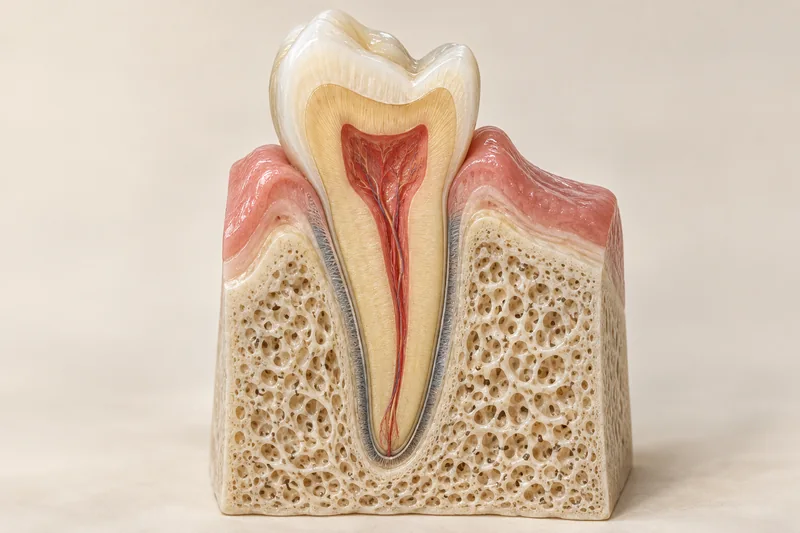
Pulp is the soft tissue containing nerves and blood vessels inside a tooth. Treatment depends on its condition and on whether and how the tooth can be retained.
Pulpectomy removes pulp from the crown and canals. Pulpotomy removes only part of it to preserve remaining vital tissue when the circumstances are suitable.
Cleaning, an appropriate seal and restoration of the tooth form part of the subsequent treatment plan. Primary and permanent teeth require different assessment.
Complete removal of pulp from the crown and root canal system.
The treating dentist after diagnosis and discussion.
Further cleaning, an appropriate seal and restoration according to the individual tooth.
Three steps. No audio.
Each scene can also be selected manually.

Silent educational film with German on-screen text and simplified teaching images. Not a patient case or a promised treatment outcome. The full English explanation is available below.
Pulp is the soft tissue containing nerves and blood vessels inside a tooth. Treatment depends on its condition and on whether and how the tooth can be retained.
Pulpectomy removes pulp from the crown and canals. Pulpotomy removes only part of it to preserve remaining vital tissue when the circumstances are suitable.
Cleaning, an appropriate seal and restoration of the tooth form part of the subsequent treatment plan. Primary and permanent teeth require different assessment.
Pulpectomy removes all pulp tissue; pulpotomy removes only part. These terms alone say nothing about individual suitability or treatment success.
No. Pain alone does not determine the procedure. Diagnosis, the condition of the tooth and root development help determine whether pulp-preserving treatment may be appropriate.
No. Extraction removes the tooth. Pulpectomy concerns tissue inside it.
Not automatically. Removal alone replaces neither further cleaning nor an appropriate seal and a sound restoration of the tooth.
An editorially suggested question for a discussion with Dr med dent Niusha Barahmand Pour:
What does examination show about the pulp, and which tooth-preserving approach follows from that finding?
Persistent dental discomfort needs examination before individual treatment steps are decided.
Have dental symptoms examinedAppointment selection at DoctolibPulpectomy removes all pulp tissue; pulpotomy removes only part. These terms alone say nothing about individual suitability or treatment success.
Editorial research: . General information, not an individual diagnosis or treatment recommendation. Teaching illustrations are simplified and do not depict a patient case.