How does reflux differ from acid in drinks?
Reflux brings acid from the stomach.

Reflux-related tooth erosion is loss of tooth structure to which repeated exposure to stomach acid contributes. The acidic stomach contents must reach the mouth for this to occur.
For training & practice ↓
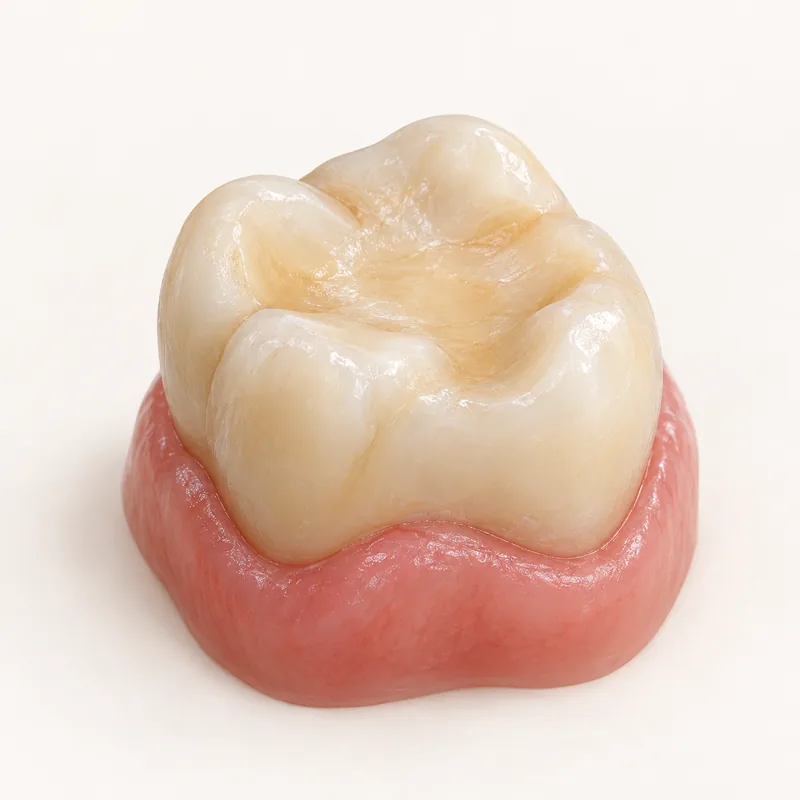
In reflux the acid originates inside the body, whereas acidic drinks are an external source. Both can attack tooth surfaces. Frequency and duration of contact matter.
The dentist examines the distribution of wear and asks about regurgitation and diet. Changes on the inner surfaces of the upper teeth can provide a clue. The pattern alone cannot establish reflux.
Tell your primary care clinician about the symptoms too. The dental team can assess tissue loss and monitor its progression. Together these assessments guide efforts to reduce further acid exposure.
Reflux brings acid from the stomach.
Both the examination and the history matter.
Have the teeth assessed by a dentist and reflux symptoms assessed medically.
Three steps. No audio.
Each scene can also be selected manually.

Silent educational film with German on-screen text and simplified teaching images. Not a patient case or a promised treatment outcome. The full English explanation is available as text.
In erosion, acid acts directly on the surface. In decay, bacteria in plaque produce acids from fermentable carbohydrates. Both processes can occur together.
In reflux the acid originates inside the body, whereas acidic drinks are an external source. Both can attack tooth surfaces. Frequency and duration of contact matter.
The dentist examines the distribution of wear and asks about regurgitation and diet. Changes on the inner surfaces of the upper teeth can provide a clue. The pattern alone cannot establish reflux.
Tell your primary care clinician about the symptoms too. The dental team can assess tissue loss and monitor its progression. Together these assessments guide efforts to reduce further acid exposure.
Lost tooth contours do not grow back. Prevention and monitoring aim to limit further loss.
In erosion, acid acts directly on the surface. In decay, bacteria in plaque produce acids from fermentable carbohydrates. Both processes can occur together.
A question you could ask
Which surfaces show wear and how can we compare changes over time?
If your teeth feel thin or sensitive and you have frequent reflux, contact your dentist and primary care clinician.
Discuss at a dental appointmentAppointment selection at DoctolibIn erosion, acid acts directly on the surface. In decay, bacteria in plaque produce acids from fermentable carbohydrates. Both processes can occur together.
Editorial research: . General information, not an individual diagnosis or treatment recommendation. Teaching illustrations are simplified and do not depict a patient case.
If you turn this on, this website stores which guides you open, separately from advertising preferences. The markers expire after a fixed 30-day period from activation. The list is not sent to us by this feature. You can turn it off here and delete the markers.
Other people using the same browser profile can also see the markers. German and English versions share one marker. Expired entries are removed the next time you open a page with this feature; deleting browser data may remove them earlier. “Viewed” means opened, not read or completed.