Does the card contain the image?
A paper card lists examinations. To assess a tooth, the practice may need the actual image and associated findings. Ask the previous practice how the image can be shared.

An X-ray record card lists previous X-ray examinations. The date, area imaged, type of image and name of the practice help the next clinician locate an earlier image when you change practices.
For training & practice ↓
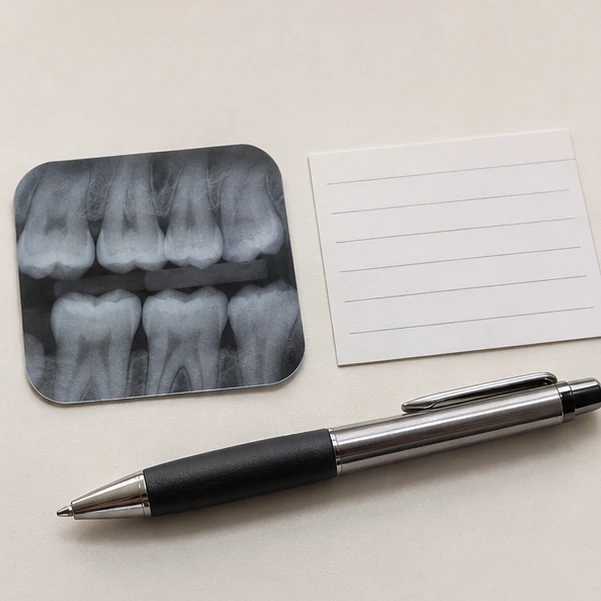
The record helps locate an earlier image. To compare appearances, the clinician needs the image itself.
A bitewing shows parts of the upper and lower back teeth. The card can record this type of view.
Before changing practices, note where and when previous images were taken.
The record helps locate an earlier image. To compare appearances, the clinician needs the image itself.
A bitewing shows parts of the upper and lower back teeth. The card can record this type of view.
Before changing practices, note where and when previous images were taken.
A paper card lists examinations. To assess a tooth, the practice may need the actual image and associated findings. Ask the previous practice how the image can be shared.
An earlier image may answer the current question. The area imaged, image quality and any changes since then matter. Bring the card or images you already have.
Give the name of the practice, approximate date and whether the image covered one tooth or both jaws. These details help identify the examination.
Three steps. No audio.
Each scene can also be selected manually.

Silent film with English on-screen text and simplified teaching images.
A card identifies an examination. A report describes what a clinician saw.
A paper card lists examinations. To assess a tooth, the practice may need the actual image and associated findings. Ask the previous practice how the image can be shared.
An earlier image may answer the current question. The area imaged, image quality and any changes since then matter. Bring the card or images you already have.
Give the name of the practice, approximate date and whether the image covered one tooth or both jaws. These details help identify the examination.
A question to ask
Can one of my earlier images answer today’s question?
Bring earlier images and your record card to the appointment.
Choose an appointmentAppointment selection at DoctolibAn examination list records that imaging took place. Image interpretation and the indication for a new image require additional information.
Editorial research: . General information, not an individual diagnosis or treatment recommendation. Teaching illustrations are simplified and do not depict a patient case.
If you turn this on, this website stores which guides you open, separately from advertising preferences. The markers expire after a fixed 30-day period from activation. The list is not sent to us by this feature. You can turn it off here and delete the markers.
Other people using the same browser profile can also see the markers. German and English versions share one marker. Expired entries are removed the next time you open a page with this feature; deleting browser data may remove them earlier. “Viewed” means opened, not read or completed.