Tooth contact at rest?
A small gap usually remains.

The mandibular rest position is the relaxed posture of the lower jaw when not actively chewing, swallowing or clenching. The jaw muscles retain a low level of activity, and the upper and lower teeth usually do not touch. This is not one rigidly fixed point. It contributes to assessment of jaw relationships and differs from the position with the teeth in contact.
For training & practice ↓
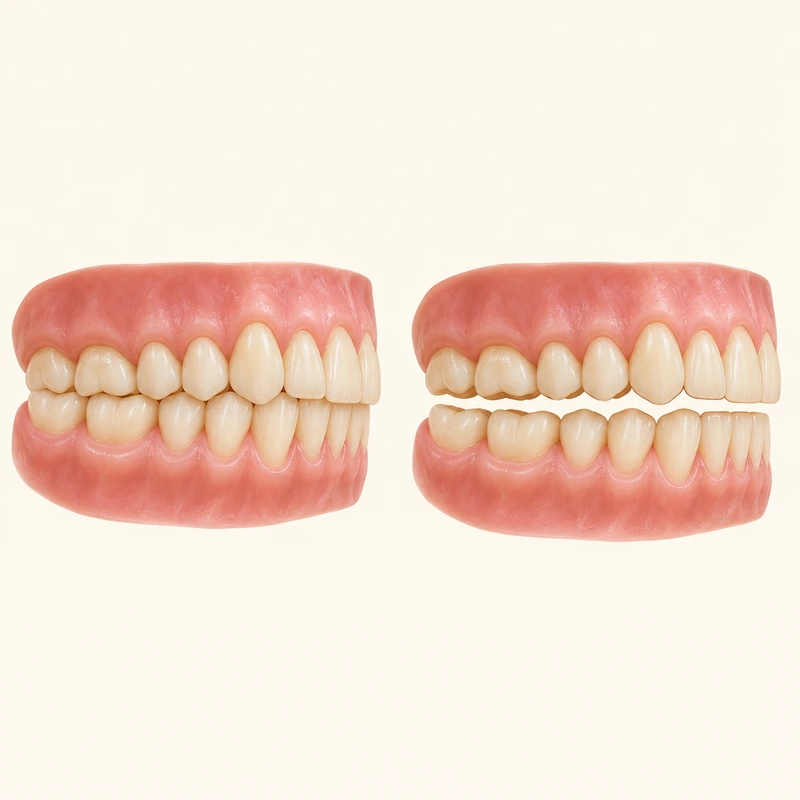
A small gap usually remains between the tooth rows in a relaxed jaw posture. The muscles are not completely switched off.
Resting space can differ between people and measurement conditions. An average value is not a compulsory target for every individual mouth.
Rest position contributes to planning. It is considered alongside tooth contact, speech, symptoms and existing restorations.
A small gap usually remains.
No; low background activity remains.
No; several findings matter.
Three steps. No audio.
Each scene can also be selected manually.

Silent educational film with German on-screen text and simplified teaching images. Not a patient case or a promised treatment outcome. The full English explanation is available as text.
Rest position does not involve active clenching. Occlusal vertical dimension refers to a defined position with the teeth in contact.
There is usually a small gap. Deliberate clenching differs from relaxed resting posture. Persistent tension can be discussed with a clinician.
Natural variation exists. A group average is not an individual target and does not, on its own, justify changing teeth.
No. The situation and recording method can affect it. Even asking someone to relax more can influence the measurement.
No. Rest position describes a posture with low muscle activity. Centric relation is a separate, joint-related reference used in planning.
A self-measured gap is insufficient. Restorative planning combines several clinical features; do not force your jaw into a supposedly correct position.
You can bring this question to your appointment:
How will my relaxed jaw posture be assessed, and what does it mean for the planned restoration?
A dental examination can clarify how this relates to your findings and treatment planning.
Discuss your dental findingsAppointment selection at DoctolibRest position does not involve active clenching. Occlusal vertical dimension refers to a defined position with the teeth in contact.
Editorial research: . General information, not an individual diagnosis or treatment recommendation. Teaching illustrations are simplified and do not depict a patient case.
If you turn this on, this website stores which guides you open, separately from advertising preferences. The markers expire after a fixed 30-day period from activation. The list is not sent to us by this feature. You can turn it off here and delete the markers.
Other people using the same browser profile can also see the markers. German and English versions share one marker. Expired entries are removed the next time you open a page with this feature; deleting browser data may remove them earlier. “Viewed” means opened, not read or completed.