What does it describe?
The vertical jaw relationship with the bite closed.

Occlusal vertical dimension describes the vertical relationship of the upper and lower jaws with the bite closed. It is assessed between defined reference points and is not simply the visible length of individual teeth. When planning restorations, tooth contacts, function, appearance and the resting posture of the lower jaw are considered together.
For training & practice ↓
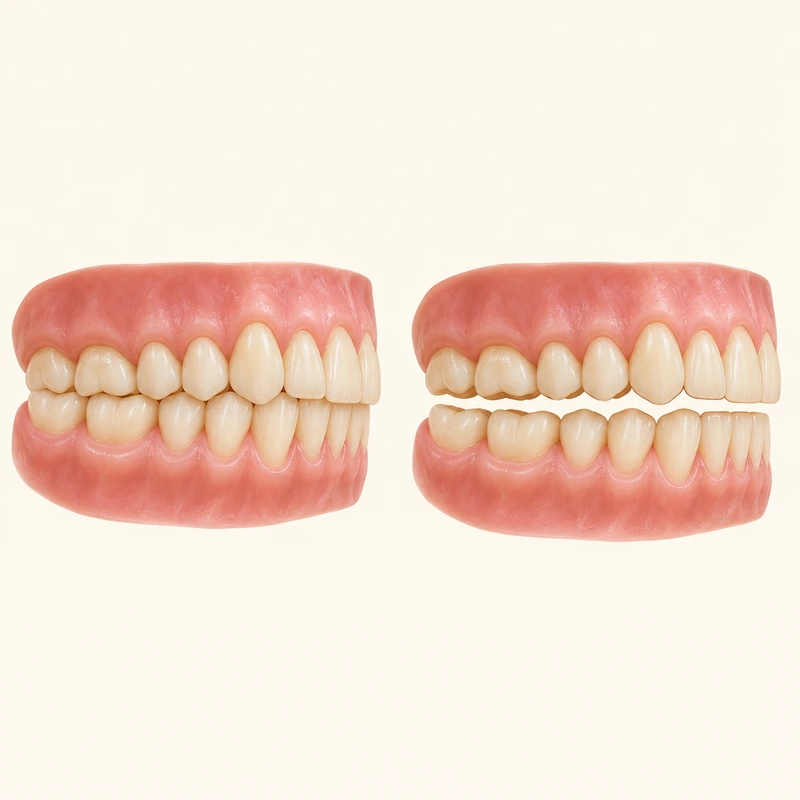
Occlusal vertical dimension describes a vertical relationship at tooth contact. It differs from the height of one crown or the overlap of the front teeth.
Tooth contacts, existing restorations, speech and resting posture inform assessment. A photograph or a single measurement does not determine the appropriate height alone.
Increasing vertical dimension is a treatment decision, not another name for the measurement. Any change depends on the findings, restorative needs and individual tolerance.
The vertical jaw relationship with the bite closed.
No; assessment is individual.
No; a change needs a reasoned plan.
Three steps. No audio.
Each scene can also be selected manually.

Silent educational film with German on-screen text and simplified teaching images. Not a patient case or a promised treatment outcome. The full English explanation is available as text.
Occlusal vertical dimension describes a relationship. Bite raising is a deliberate increase in that dimension during treatment.
Defined reference points and the position at tooth contact can be measured. Tooth structure, jaw relationships, speech and resting posture also inform assessment. No single value suits everyone.
No. Visible wear alone does not establish that conclusion. Changes in the jaw relationship and space required for restorations need separate assessment.
An unfamiliar early contact or discomfort on biting should be checked. This does not prove that the overall vertical dimension is wrong; a single interfering contact is a different issue.
No. It is assessed and established for the restoration. Changing it needs a specific reason, rather than simply the fact that a new denture is being made.
No. Jaw symptoms have different causes. Permanent bite changes are not a general treatment for TMD; appropriate assessment comes first.
You can bring this question to your appointment:
Which findings support the proposed vertical dimension, and does it need to change for my restoration at all?
A dental examination can clarify how this relates to your findings and treatment planning.
Discuss your dental findingsAppointment selection at DoctolibOcclusal vertical dimension describes a relationship. Bite raising is a deliberate increase in that dimension during treatment.
Editorial research: . General information, not an individual diagnosis or treatment recommendation. Teaching illustrations are simplified and do not depict a patient case.
If you turn this on, this website stores which guides you open, separately from advertising preferences. The markers expire after a fixed 30-day period from activation. The list is not sent to us by this feature. You can turn it off here and delete the markers.
Other people using the same browser profile can also see the markers. German and English versions share one marker. Expired entries are removed the next time you open a page with this feature; deleting browser data may remove them earlier. “Viewed” means opened, not read or completed.