Which materials?
Classically glass ionomer and composite resin.

A sandwich restoration layers different filling materials, classically glass ionomer or a modified glass ionomer beneath composite resin. The materials are intended to serve different roles. Whether this combination is appropriate depends on the defect and materials; it is not inherently longer-lasting than another suitable restoration.
For training & practice ↓
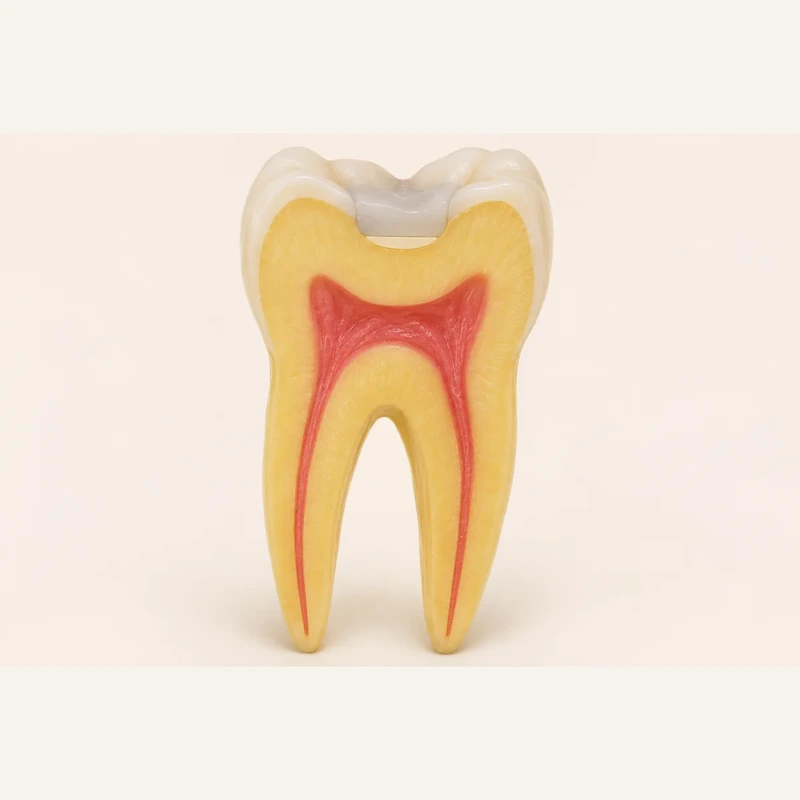
The lower layer lies within the defect, while composite forms part of the external contour. The combination requires correct processing and well-sealed interfaces.
In a closed sandwich, the underlying layer is covered externally. In an open sandwich, it reaches the oral environment at one margin, where its behaviour needs particular consideration.
Loading, margin position and material properties guide selection. The technique does not replace caries control, good cleaning or later restoration checks.
Classically glass ionomer and composite resin.
No. Suitability depends on the defect and materials.
Margins, material condition and caries risk.
Three steps. No audio.
Each scene can also be selected manually.

Silent educational film with German on-screen text and simplified teaching images. Not a patient case or a promised treatment outcome. The full English explanation is available as text.
Several increments of the same composite do not constitute a classic glass-ionomer–composite sandwich. Here, the term refers to combining different material types.
No. Open means part of the underlying layer reaches the mouth at a margin. The completed restoration should still close the defect.
No. An additional material interface can also add complexity. There should be a specific reason for choosing it over alternatives.
No. Fluoride release does not replace effective cleaning, appropriate fluoride use or management of caries risk.
You can bring this question to your appointment:
What specific benefit is this material combination intended to offer for my defect, and what alternatives are available?
An individual examination can clarify the findings and suitable next steps.
Arrange an assessmentAppointment selection at DoctolibSeveral increments of the same composite do not constitute a classic glass-ionomer–composite sandwich. Here, the term refers to combining different material types.
Editorial research: . General information, not an individual diagnosis or treatment recommendation. Teaching illustrations are simplified and do not depict a patient case.
If you turn this on, this website stores which guides you open, separately from advertising preferences. The markers expire after a fixed 30-day period from activation. The list is not sent to us by this feature. You can turn it off here and delete the markers.
Other people using the same browser profile can also see the markers. German and English versions share one marker. Expired entries are removed the next time you open a page with this feature; deleting browser data may remove them earlier. “Viewed” means opened, not read or completed.