Is tissue missing?
Not in a pure enamel infraction.

An enamel infraction is an incomplete crack in enamel without loss of tooth tissue. After an impact, only a fine line may be visible. The tooth must still be assessed for associated mobility, displacement or root injury. A confirmed isolated enamel infraction often needs no active treatment; associated injuries change treatment and follow-up.
For training & practice ↓
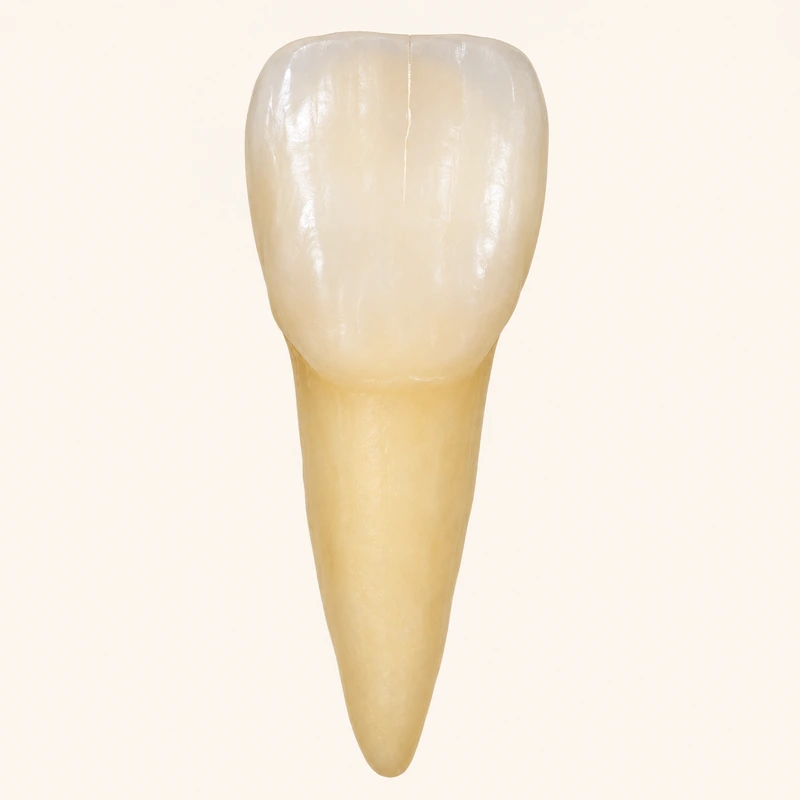
With an infraction, the outer tooth shape remains intact. The crack involves enamel without a missing fragment. This differs from a visible chip.
Tenderness to tapping, mobility or a changed bite do not fit a purely isolated infraction. The tooth and supporting tissues need assessment; further imaging depends on the findings.
An isolated fine enamel crack may need no treatment. Sealing can be considered for pronounced infractions. Associated injuries determine whether and when follow-up is required.
Not in a pure enamel infraction.
Often not, if it is confirmed to be isolated.
Have associated injuries assessed professionally.
Three steps. No audio.
Each scene can also be selected manually.

Silent educational film with German on-screen text and simplified teaching images. Not a patient case or a promised treatment outcome. The full English explanation is available as text.
An infraction is a crack without tissue loss. In an enamel fracture, a fragment has chipped away. A deeper tooth crack may extend beyond enamel.
No. Extent and associated findings matter. IADT guidance often recommends no treatment for isolated infractions, while pronounced cases may be assessed differently.
Pain, mobility or an altered bite need prompt dental assessment. A small visible line does not rule out a deeper injury.
Not because of an enamel infraction alone. Pulp condition and any associated injuries are assessed separately.
You can bring this question to your appointment:
Is the crack definitely limited to enamel, and are there associated injuries that need follow-up?
An individual assessment can clarify the findings and whether referral is needed.
Arrange an assessmentAppointment selection at DoctolibAn infraction is a crack without tissue loss. In an enamel fracture, a fragment has chipped away. A deeper tooth crack may extend beyond enamel.
Editorial research: . General information, not an individual diagnosis or treatment recommendation. Teaching illustrations are simplified and do not depict a patient case.
If you turn this on, this website stores which guides you open, separately from advertising preferences. The markers expire after a fixed 30-day period from activation. The list is not sent to us by this feature. You can turn it off here and delete the markers.
Other people using the same browser profile can also see the markers. German and English versions share one marker. Expired entries are removed the next time you open a page with this feature; deleting browser data may remove them earlier. “Viewed” means opened, not read or completed.