What alternative is assessed?
Whether the original fragment can be bonded back.

A direct incisal edge build-up replaces missing front tooth tissue with tooth-coloured composite. It is bonded to the remaining tooth, shaped and cured. After an accident the clinician first assesses whether there is also injury to the pulp, root or supporting tissues.
For training & practice ↓
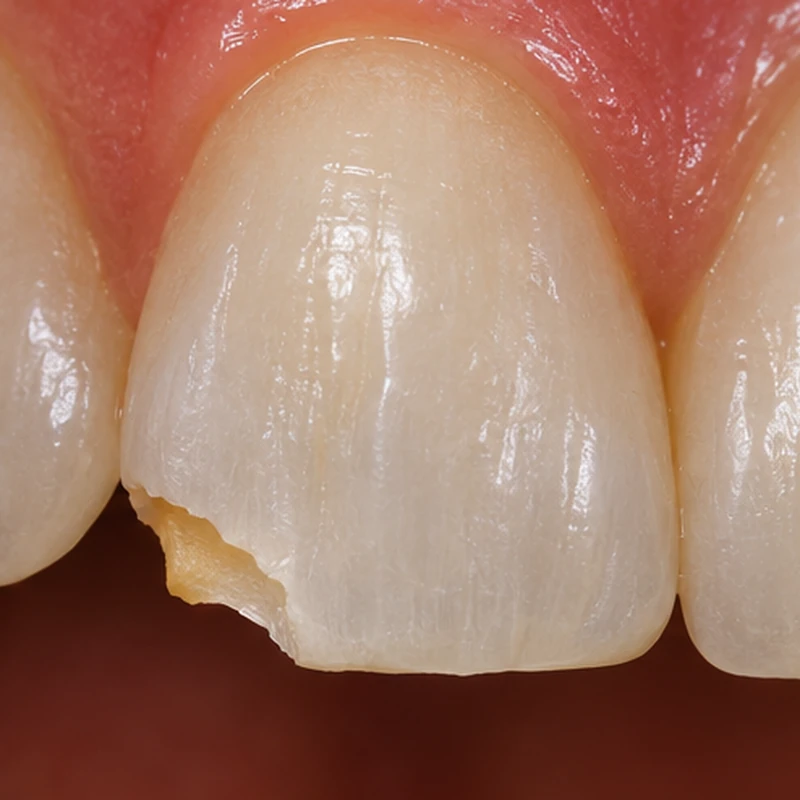
The model shows a break in the enamel edge at one corner. After trauma the team also checks tooth position, mobility and possible accompanying injuries.
The corner is shaped in relation to the neighbouring tooth and remaining edge. Composite can be layered, cured and polished.
Opposing contact shows where forces may act during biting and jaw movements. A newly chipped or heavily loaded edge needs reassessment.
Whether the original fragment can be bonded back.
Defect, bonding surface and loading.
Whether polishing or repair is sufficient.
Three steps. No audio.
Each scene can also be selected manually.

Silent film with English on-screen text and simplified teaching images.
The original broken fragment is bonded back. A direct build-up reconstructs the missing part in composite.
Yes. If you have it, bring it to prompt assessment after the injury. Depending on the fracture, reattachment may be an option.
There is no universal answer. Defect size, remaining enamel and the bite influence the choice. A small direct addition often preserves tooth tissue.
Have the margin checked. Polishing, local repair or a new build-up may be appropriate. After a further blow the tooth itself also needs assessment.
A question to bring along
Is only the edge injured, or does the tooth need further follow-up?
Seek prompt assessment for a newly injured front tooth, particularly if it is loose, displaced or shows a reddish area in the fracture.
Choose an appointmentAppointment selection at DoctolibImmediate restoration of appearance and follow-up of the injured tooth serve different purposes.
Editorial research: . General information, not an individual diagnosis or treatment recommendation. Teaching illustrations are simplified and do not depict a patient case.
If you turn this on, this website stores which guides you open, separately from advertising preferences. The markers expire after a fixed 30-day period from activation. The list is not sent to us by this feature. You can turn it off here and delete the markers.
Other people using the same browser profile can also see the markers. German and English versions share one marker. Expired entries are removed the next time you open a page with this feature; deleting browser data may remove them earlier. “Viewed” means opened, not read or completed.