What does locking taper mean here?
A screwless abutment retained in the implant by a friction fit.

In a screwless locking-taper connection, the tapered post of the abutment fits into a matching socket inside the implant. The two surfaces are seated according to the system's instructions. Friction holds them together without a separate abutment screw.
For training & practice ↓
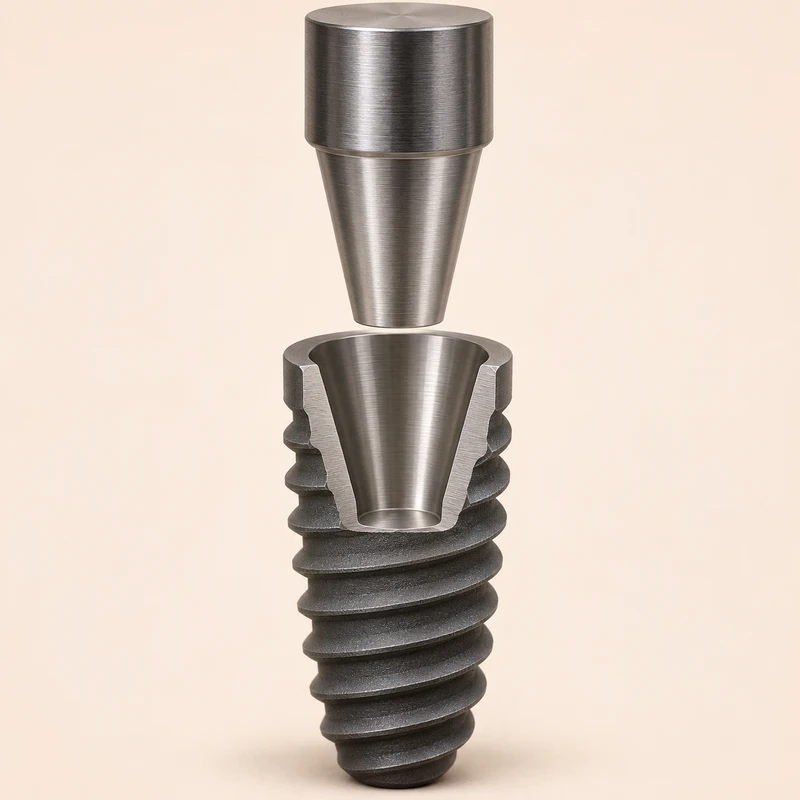
The post and internal taper are the mating parts. External threads engage bone and serve a different purpose.
The taper describes retention between the implant and the abutment. The crown's attachment to the abutment depends on the restoration.
The team checks whether the movement comes from the crown, abutment or implant. Knowing the implant system helps identify the instruments and components needed.
A screwless abutment retained in the implant by a friction fit.
Have the cause and seating checked by a dental professional.
Connection shapes and retrieval instruments vary by system.
Three steps. No audio.
Each scene can also be selected manually.

Silent film with English on-screen text and simplified teaching images.
Inner and outer crowns can retain a removable denture. The locking taper described here connects an implant abutment to an implant.
Many systems combine a taper with a screw. Describing a connection as conical tells you its shape, but does not establish whether it also uses a screw.
Yes. Occasional abutment loosening occurred in a long-term clinical study. Have a moving crown assessed before chewing firmly on that side again.
Bring your implant record, any paperwork identifying the system and any component that has already come out. Keep the part safe until the visit.
A question to bring along
Which connection is listed in my implant record, and how is the crown attached to it?
Bring your implant record when you have a loose abutment assessed.
Choose a dental appointmentAppointment selection at DoctolibAbutment retention, crown retention and anchorage in bone are assessed separately.
Editorial research: . General information, not an individual diagnosis or treatment recommendation. Teaching illustrations are simplified and do not depict a patient case.
If you turn this on, this website stores which guides you open, separately from advertising preferences. The markers expire after a fixed 30-day period from activation. The list is not sent to us by this feature. You can turn it off here and delete the markers.
Other people using the same browser profile can also see the markers. German and English versions share one marker. Expired entries are removed the next time you open a page with this feature; deleting browser data may remove them earlier. “Viewed” means opened, not read or completed.