Is a stone always responsible?
Changes in the duct wall can also obstruct drainage.

Salivary duct stenosis is a narrowing of a gland's drainage duct. When saliva production increases, fluid may back up behind the narrowing. The area can swell during a meal and settle afterwards. Other causes can produce the same pattern.
For training & practice ↓
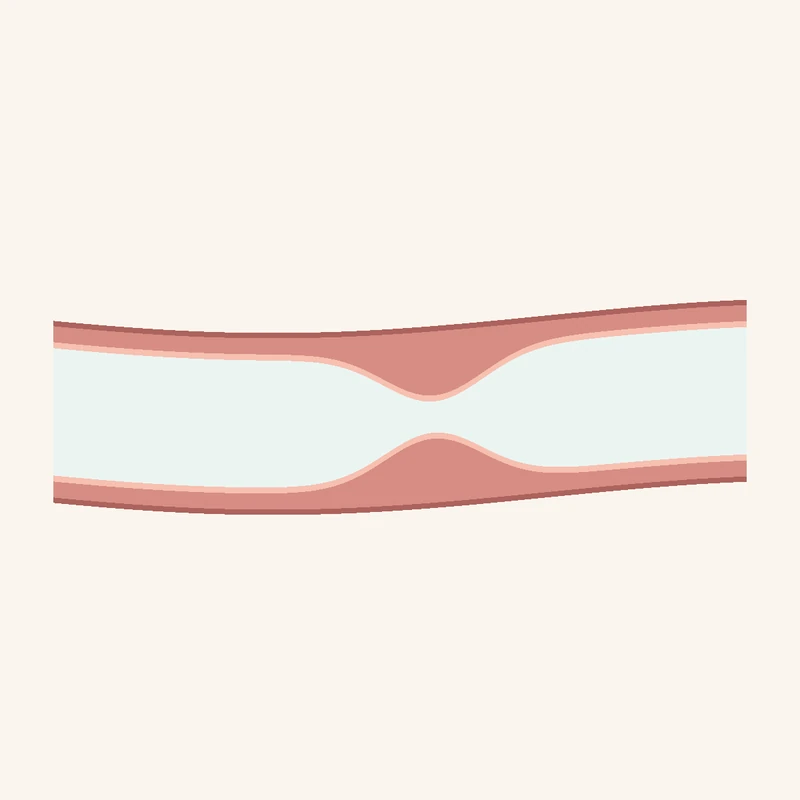
Inflammatory changes or fibrotic thickening can narrow the lumen. The diagram shows one localised stricture.
Eating stimulates secretion. If drainage is restricted, pressure and swelling can develop. Their location helps identify the gland involved.
After history and examination, ultrasound can provide clues. When indicated, a miniature endoscope can show the narrowing from within.
Changes in the duct wall can also obstruct drainage.
It may subside between meals.
Management depends on the findings and duct-preserving approaches may be possible.
Three steps. No audio.
Each scene can also be selected manually.

Silent film with English on-screen text and simplified teaching images.
Stenosis narrows the duct lumen. A stone consists of deposited material.
A stone is a solid deposit in the duct. Stenosis describes its reduced calibre. Investigations may distinguish the two.
Note the side, trigger, duration and frequency of episodes and any fever or unusual taste.
An ENT or maxillofacial team experienced in salivary disorders can assess the type, extent and location of the narrowing.
A photo during a swelling episode can document changes that settle before the appointment.
Does the pattern suggest an outflow problem and which test comes next?
Arrange assessment of recurrent one-sided swelling.
Call the practice · 0221 669 401 80Telephone contactSwelling at meals suggests an outflow problem. Examination is needed to identify its cause.
Editorial research: . General information, not an individual diagnosis or treatment recommendation. Teaching illustrations are simplified and do not depict a patient case.
If you turn this on, this website stores which guides you open, separately from advertising preferences. The markers expire after a fixed 30-day period from activation. The list is not sent to us by this feature. You can turn it off here and delete the markers.
Other people using the same browser profile can also see the markers. German and English versions share one marker. Expired entries are removed the next time you open a page with this feature; deleting browser data may remove them earlier. “Viewed” means opened, not read or completed.