Which treatment is relevant?
Particularly radiotherapy to the head and neck.

Radiation-related caries is tooth decay promoted by changes after head and neck radiotherapy. Less protective saliva may be available. The increased risk can persist long after treatment has ended.
For training & practice ↓
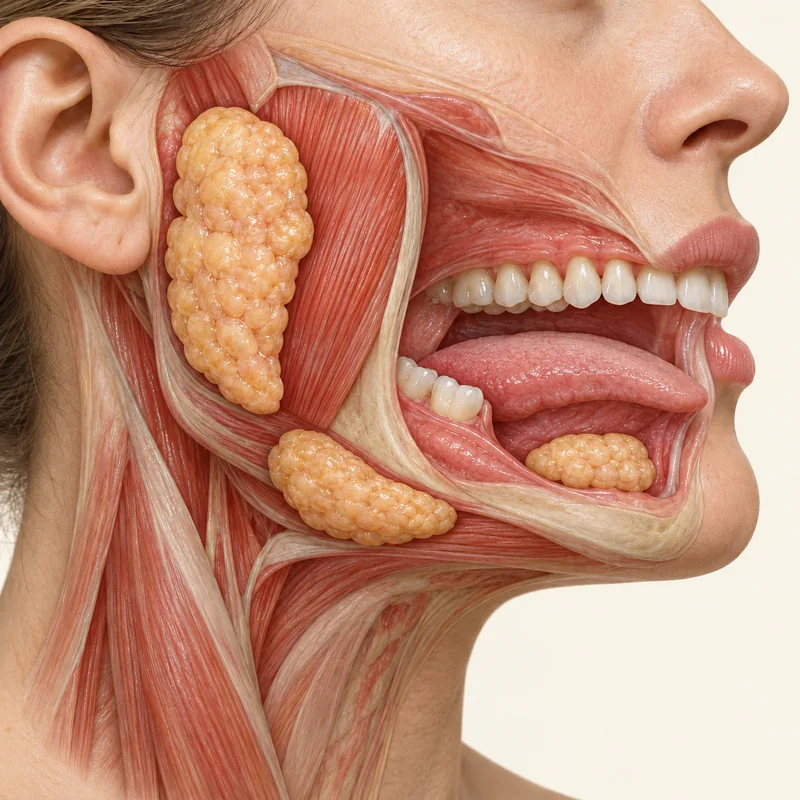
Saliva clears debris, buffers acid and supplies minerals. Glands in the radiation field can produce less saliva over the long term.
Several surfaces can be affected when risk is increased, including areas near the gumline. Regular reviews help identify new lesions early.
Aftercare includes daily cleaning and a tailored fluoride regimen. With dry mouth, discuss everyday eating and drinking difficulties as well.
Particularly radiotherapy to the head and neck.
The area treated, timing and current symptoms.
It helps protect mineralised tooth surfaces.
Three steps. No audio.
Each scene can also be selected manually.

Silent film with English on-screen text and simplified teaching images.
Caries affects mineralised tooth tissue. Radiation-related mucositis affects the oral lining and needs its own management.
It is especially relevant when the head and neck are treated and the field includes salivary glands or other oral structures. Risk depends on the treatment and baseline dental health.
Ideally before radiotherapy begins, so the dental and oncology teams can coordinate prevention and necessary care. This information remains important years later.
Dry mouth is a symptom. An examination establishes whether tooth structure is already affected. Persistent dryness can prompt changes to protection before more sites develop.
A question to bring along
How can we tailor fluoride protection and check-ups to my radiation treatment plan?
Mention planned or previous head and neck radiotherapy when arranging dental care.
Choose an appointmentAppointment selection at DoctolibIn the observational OraRad study, daily fluoride use and consistent oral hygiene were associated with a smaller increase in affected tooth surfaces. Association alone does not establish individual causation.
Editorial research: . General information, not an individual diagnosis or treatment recommendation. Teaching illustrations are simplified and do not depict a patient case.
If you turn this on, this website stores which guides you open, separately from advertising preferences. The markers expire after a fixed 30-day period from activation. The list is not sent to us by this feature. You can turn it off here and delete the markers.
Other people using the same browser profile can also see the markers. German and English versions share one marker. Expired entries are removed the next time you open a page with this feature; deleting browser data may remove them earlier. “Viewed” means opened, not read or completed.