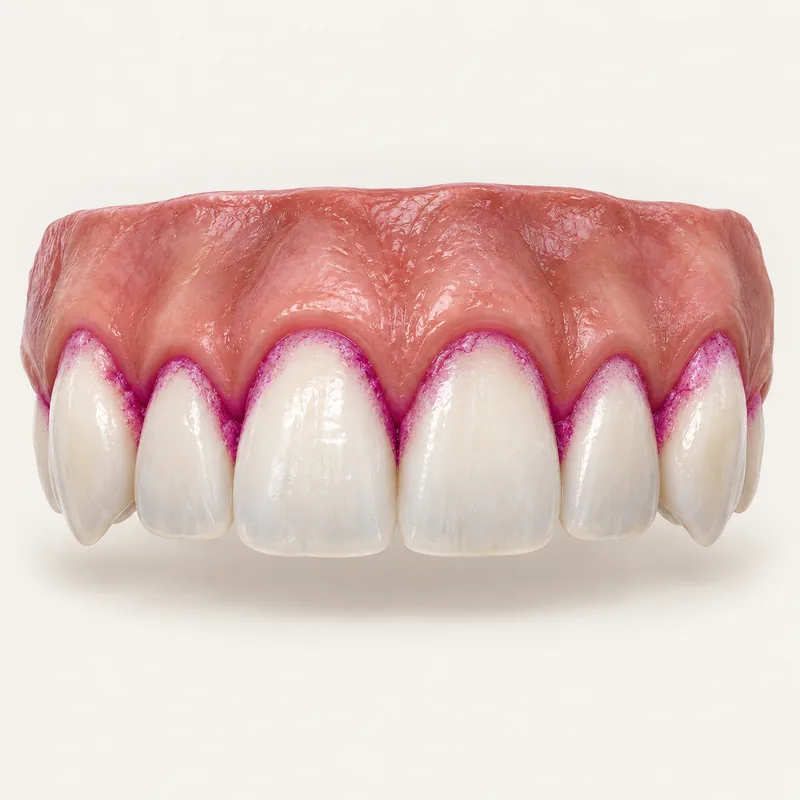
Does finding Streptococcus mutans mean I have a cavity?
Streptococcus mutans is a bacterial species that can live in dental plaque and produce acids from sugars. Repeated acid exposure can cause a tooth surface to lose minerals. Finding one species cannot by itself identify a cavity or tell which tooth is affected.
Decay reflects the microbial community, sugar exposure, saliva and the tooth surface. A childhood study found associations with several bacterial groups. Laboratory findings need to be interpreted alongside the clinical examination.
02
Why does the frequency of sugary snacks matter?
Each new sugar exposure can lead plaque bacteria to produce more acid. Between exposures, saliva and fluoride can support mineral recovery. Frequent sugary snacks reduce those recovery periods.
03
Do I need to eliminate all oral bacteria?
A diverse oral microbiota is normal. Daily prevention centres on plaque removal, fluoride toothpaste and reducing frequent sugar exposure. The examination determines whether a particular site needs treatment.
Knowledge in motion
Explained in 36 seconds.
Three steps. No audio. Each scene can also be selected manually.
Silent film with English on-screen text and simplified teaching images.
A test may detect an organism. Diagnosing a lesion requires assessment of the tooth surface.
Quick answersDoes one germ explain tooth decay?
Decay reflects the microbial community, sugar exposure, saliva and the tooth surface. A childhood study found associations with several bacterial groups. Laboratory findings need to be interpreted alongside the clinical examination.
Why does the frequency of sugary snacks matter?
Each new sugar exposure can lead plaque bacteria to produce more acid. Between exposures, saliva and fluoride can support mineral recovery. Frequent sugary snacks reduce those recovery periods.
Do I need to eliminate all oral bacteria?
A diverse oral microbiota is normal. Daily prevention centres on plaque removal, fluoride toothpaste and reducing frequent sugar exposure. The examination determines whether a particular site needs treatment.
At the practice
At your appointment
A question to ask
Which surfaces are at increased risk in my mouth and why?
Discuss your personal decay risk and any concerning sites at an examination.
Editorial research: . General information, not an individual diagnosis or treatment recommendation. Teaching illustrations are simplified and do not depict a patient case.
If you turn this on, this website stores which guides you open, separately from advertising preferences. The markers expire after a fixed 30-day period from activation. The list is not sent to us by this feature. You can turn it off here and delete the markers.
Other people using the same browser profile can also see the markers. German and English versions share one marker. Expired entries are removed the next time you open a page with this feature; deleting browser data may remove them earlier. “Viewed” means opened, not read or completed.
With your consent, we use Google Ads to attribute clicks on our appointment booking links and phone number to adverts. Google processes technical usage data and sets or reads cookies. Data may be processed in the USA. Advertising measurement does not load without your consent. Google Analytics and personalised advertising are not enabled. Google Maps loads separately when you choose to open the map. You can change your choice here at any time.