A filling material?
No, a bonding system.

A universal adhesive is a dental bonding system designed, depending on the product, for several etching strategies and applications. It links the tooth surface to a resin-based restorative material. Options include self-etch application, selective enamel etching and an etch-and-rinse approach. “Universal” does not mean that pretreatment is unnecessary or that every ceramic, material and curing mode is automatically compatible.
For training & practice ↓
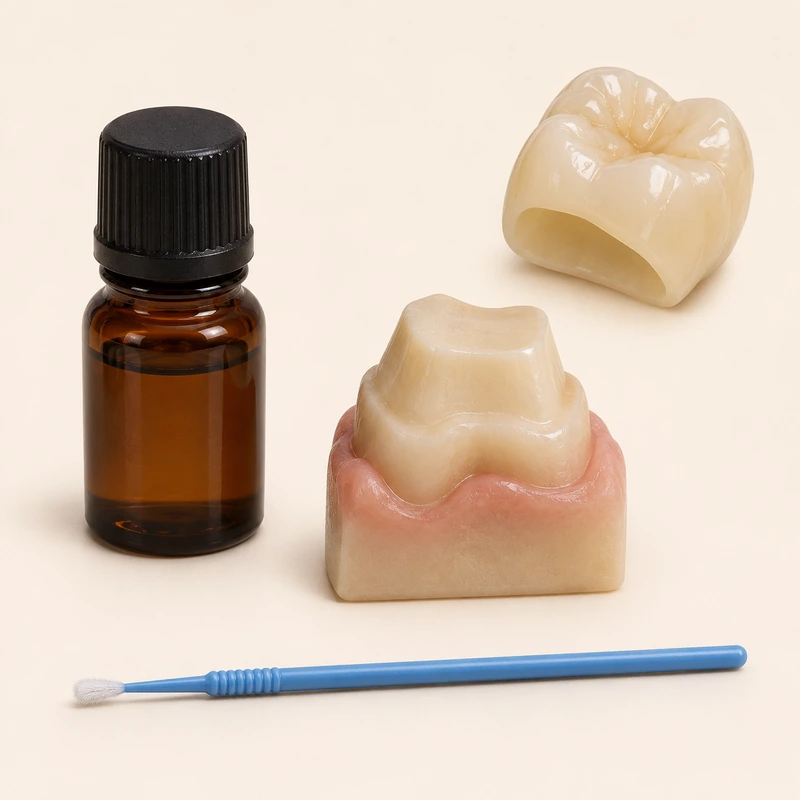
An adhesive links tooth tissue to restorative material. It does not replace the filling itself or assessment of the defect.
Universal adhesives may support different etching strategies, depending on the system. Enamel and dentin are different bonding substrates.
Indirect restorations also require the material and luting system to match. Incorporated silane does not replace separate pretreatment for every product.
No, a bonding system.
No; an appropriate etching strategy is chosen.
No; that depends on the product.
Three steps. No audio.
Each scene can also be selected manually.

Silent educational film with German on-screen text and simplified teaching images. Not a patient case or a promised treatment outcome. The full English explanation is available as text.
Adhesive technique describes the whole bonding procedure. Universal adhesives are one product category used within such procedures.
No. The adhesive is the bonding system. Composite is the material used, for example, to build the filling.
No. It refers to several possible application strategies. Whether and where separate etching is used depends on the system and surface.
No. The ceramic, surface preparation and approved uses of the particular system must match. The product category alone is insufficient.
No. A laboratory study of four products found different results. This establishes neither general interchangeability nor a universal ranking for clinical longevity.
That cannot be assumed. Clinical studies assess particular products, defects and follow-up periods. Findings in cervical lesions do not automatically apply to every filling or ceramic restoration.
You can bring this question to your appointment:
Which etching strategy and additional pretreatments suit my tooth and the chosen material?
A dental examination can clarify how this relates to your findings and treatment planning.
Discuss your dental findingsAppointment selection at DoctolibAdhesive technique describes the whole bonding procedure. Universal adhesives are one product category used within such procedures.
Editorial research: . General information, not an individual diagnosis or treatment recommendation. Teaching illustrations are simplified and do not depict a patient case.
If you turn this on, this website stores which guides you open, separately from advertising preferences. The markers expire after a fixed 30-day period from activation. The list is not sent to us by this feature. You can turn it off here and delete the markers.
Other people using the same browser profile can also see the markers. German and English versions share one marker. Expired entries are removed the next time you open a page with this feature; deleting browser data may remove them earlier. “Viewed” means opened, not read or completed.