What is its purpose?
Preparing the bonded interface.

The acid-etch technique prepares tooth surfaces for bonding with a purpose-designed acidic agent. On enamel, it creates a microscopic retentive pattern into which resin can penetrate. Depending on the adhesive system, enamel alone or enamel and dentin are etched separately; self-etch systems combine functions within a different approach. Etching is a professional treatment step, not a method of removing decay or cleaning teeth at home.
For training & practice ↓
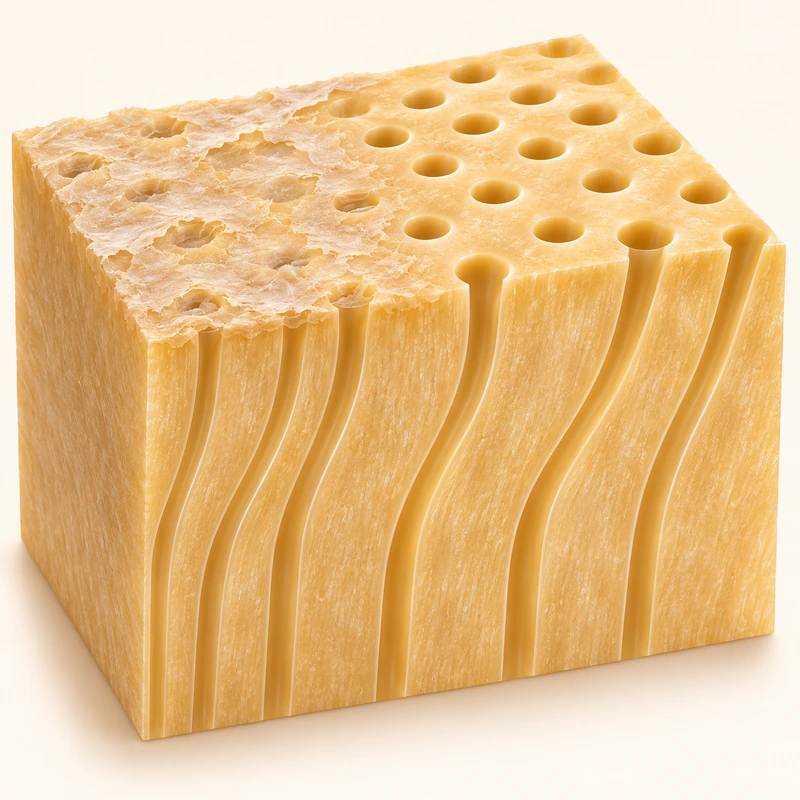
Acid etching modifies the tooth surface for subsequent bonding. Microscopic structures in enamel can provide retention for resin.
Selective enamel etching and etch-and-rinse are different strategies. The appropriate approach depends on the adhesive system and substrate.
Etching alone does not attach a filling. Surface preparation, adhesive system and restorative material must work together.
Preparing the bonded interface.
No; the strategy depends on the system.
No, it is a professional treatment step.
Three steps. No audio.
Each scene can also be selected manually.

Silent educational film with German on-screen text and simplified teaching images. Not a patient case or a promised treatment outcome. The full English explanation is available as text.
Acid etching is chemical surface preparation. Adhesive technique covers the entire bonding process, including other materials and steps.
No. Drilling or preparation mechanically removes or shapes tooth tissue. Etching chemically conditions the surface for bonding.
The separate etching step is limited to enamel. Dentin is treated according to the intended adhesive system.
It is a strategy with a separate etching and rinsing step before further bonding procedures. It differs from self-etch approaches.
No. Clinical results depend on the product, substrate and application. Findings for one adhesive cannot automatically be applied to every system.
No. This procedure belongs in dental treatment. Household or other acids cannot replace a matched system applied by a dental professional.
You can bring this question to your appointment:
Which surfaces need conditioning for my restoration, and why is this adhesive system suitable?
A dental examination can clarify how this relates to your findings and treatment planning.
Discuss your dental findingsAppointment selection at DoctolibAcid etching is chemical surface preparation. Adhesive technique covers the entire bonding process, including other materials and steps.
Editorial research: . General information, not an individual diagnosis or treatment recommendation. Teaching illustrations are simplified and do not depict a patient case.
If you turn this on, this website stores which guides you open, separately from advertising preferences. The markers expire after a fixed 30-day period from activation. The list is not sent to us by this feature. You can turn it off here and delete the markers.
Other people using the same browser profile can also see the markers. German and English versions share one marker. Expired entries are removed the next time you open a page with this feature; deleting browser data may remove them earlier. “Viewed” means opened, not read or completed.