Contagious?
No. This structural condition is not an infection.

White sponge naevus is a rare, usually inherited mucosal condition. Soft, whitish, folded areas often appear on both inner cheeks in childhood or adolescence. Changes in keratin proteins underlie the condition. The confirmed diagnosis is benign; other white mucosal lesions need to be distinguished during assessment.
For training & practice ↓
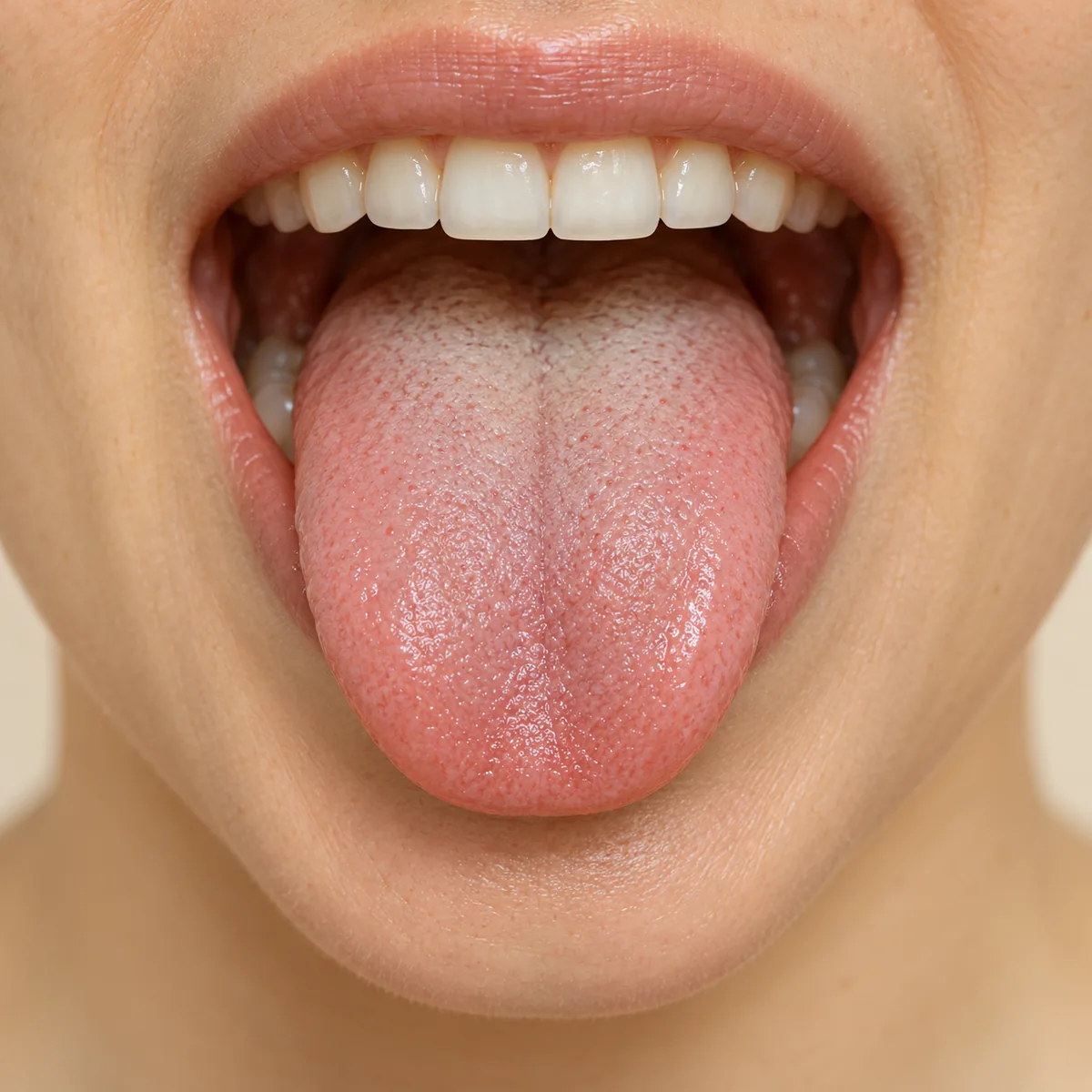
The mucosa may look soft, whitish and folded, often on both inner cheeks. The extent varies. This is a tissue change rather than food residue sitting on the surface.
Early onset and similar family findings can be clues, but absence of affected relatives does not exclude the condition. Examination and, when needed, tissue or genetic tests clarify it.
Confirmed symptom-free white sponge naevus usually needs no treatment. New pain, ulcers or other changes still need assessment rather than automatic attribution to the known condition.
No. This structural condition is not an infection.
Often childhood or adolescence.
Usually not when confirmed and symptom-free.
Three steps. No audio.
Each scene can also be selected manually.

Silent educational film with German on-screen text and simplified teaching images. Not a patient case or a promised treatment outcome. The full English explanation is available as text.
Both may appear whitish but have different origins. Leukoedema is a common mucosal variation; white sponge naevus is a rare keratin-related condition. Professional assessment distinguishes them.
No. White sponge naevus involves altered structural proteins in the mucosa. Candida and other conditions may look similar; an unexplained white lesion should not prompt repeated self-directed antifungal treatment.
Yes. A known family history can help but is not essential. Expression varies, and professional assessment remains appropriate without an identified family history.
Not automatically. The team considers appearance, history and diagnostic certainty. A biopsy can help when uncertain, and genetic testing may be useful in selected cases.
Usually not when the diagnosis is confirmed and there are no symptoms. Explaining the condition can prevent unnecessary treatment. New changes should still be reviewed separately.
You can bring this question to your appointment:
How certain is the diagnosis, and which new changes should be checked separately?
An individual examination can clarify the findings and suitable next steps.
Arrange an assessmentAppointment selection at DoctolibBoth may appear whitish but have different origins. Leukoedema is a common mucosal variation; white sponge naevus is a rare keratin-related condition. Professional assessment distinguishes them.
Editorial research: . General information, not an individual diagnosis or treatment recommendation. Teaching illustrations are simplified and do not depict a patient case.
If you turn this on, this website stores which guides you open, separately from advertising preferences. The markers expire after a fixed 30-day period from activation. The list is not sent to us by this feature. You can turn it off here and delete the markers.
Other people using the same browser profile can also see the markers. German and English versions share one marker. Expired entries are removed the next time you open a page with this feature; deleting browser data may remove them earlier. “Viewed” means opened, not read or completed.