Can the wire look bonded and still be associated with movement?
Yes. Visible adhesive does not rule out unwanted movement.

Wire syndrome describes unexpected, unwanted tooth movement in the area of a bonded retainer. A tooth may rotate or tip even when the wire still appears attached. A new change warrants prompt orthodontic assessment.
For training & practice ↓
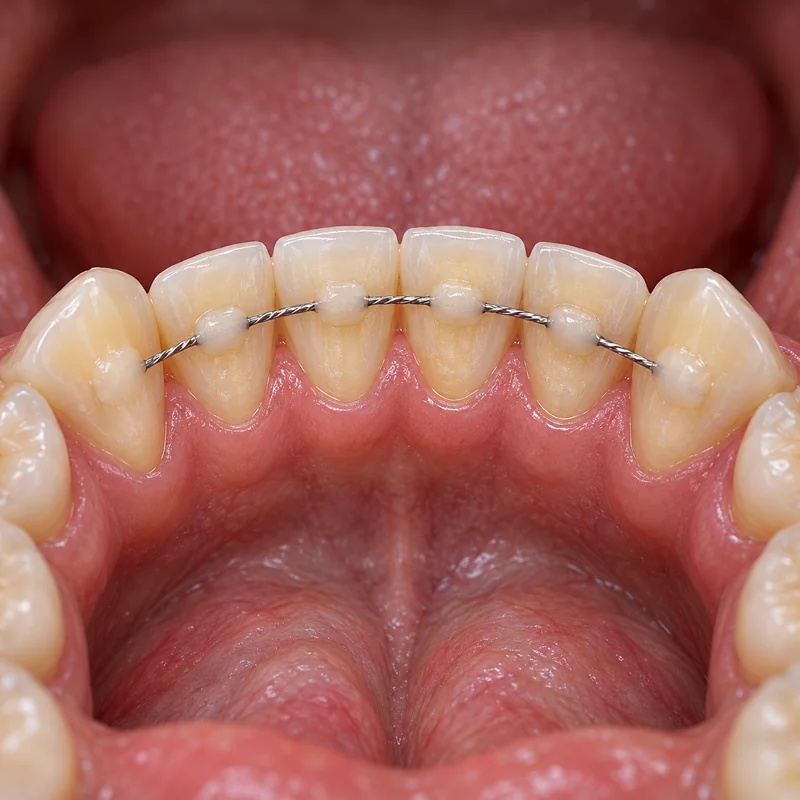
Small adhesive pads bond the retainer to the front teeth. It is intended to hold their position passively.
If an incisal edge sits farther forwards or back than before, the tooth axis may have changed. Appearance alone does not establish the cause.
The orthodontist checks the bonds and wire. Earlier photographs, scans or casts provide a reference for changes.
Yes. Visible adhesive does not rule out unwanted movement.
Contact the treating practice promptly if a change is progressing.
Leave it for professional assessment. Bending or detaching it yourself can damage teeth and soft tissues.
Three steps. No audio.
Each scene can also be selected manually.

Silent film with English on-screen text and simplified teaching images.
Relapse involves movement back towards an earlier position. Wire syndrome can produce movement in a different direction.
Examples include adjacent teeth tipping in opposite directions, a canine crown tilting or a new contact when biting. These observations need examination.
The clinician examines tooth positions, gums, wire and bonds. An earlier cast can help establish the previous position.
The extent, progression, stability and health of the teeth matter. These findings guide monitoring, changes to retention or correction.
If a tooth newly tips or rotates
Can we compare the change with my final treatment photographs or scan?
Report a new change around a retainer to the orthodontist managing your retention.
Choose an appointmentAppointment selection at DoctolibA detached bond may allow teeth to move. A new tooth position deserves assessment even when no break is visible.
Editorial research: . General information, not an individual diagnosis or treatment recommendation. Teaching illustrations are simplified and do not depict a patient case.
If you turn this on, this website stores which guides you open, separately from advertising preferences. The markers expire after a fixed 30-day period from activation. The list is not sent to us by this feature. You can turn it off here and delete the markers.
Other people using the same browser profile can also see the markers. German and English versions share one marker. Expired entries are removed the next time you open a page with this feature; deleting browser data may remove them earlier. “Viewed” means opened, not read or completed.