What can help the team prepare for the visit?
A specific previous experience helps the team plan.

The gag reflex is an involuntary protective response at the back of the mouth and throat. In some people it is easily triggered and can interfere with examinations or impressions.
For training & practice ↓
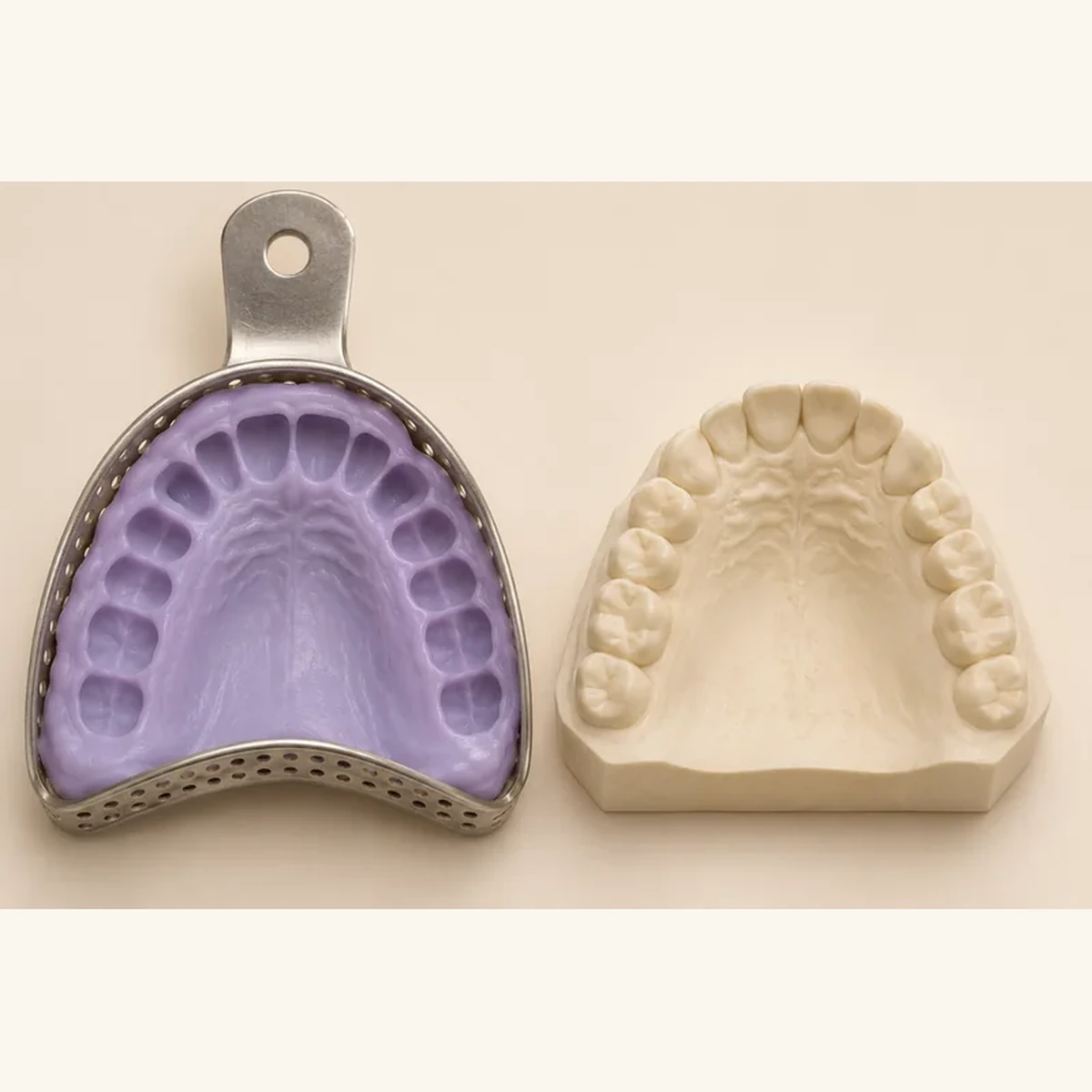
Explain beforehand which step was difficult, such as contact with an impression tray. Anticipating an unpleasant sensation can also play a part.
Agree on a visible hand signal in advance. Discuss how the team will respond and when an ongoing step can be interrupted safely.
Evidence for many interventions to control gagging is uncertain. Your dental team can discuss the procedure, your previous experience and suitable alternatives with you.
A specific previous experience helps the team plan.
An agreed signal allows communication without speaking.
No single studied approach is established as reliably effective for everyone.
Three steps. No audio.
Each scene can also be selected manually.

Silent educational film with German on-screen text and simplified teaching images. Not a patient case or a promised treatment outcome. The full English explanation is available as text.
The reflex is involuntary. Describing triggers and agreeing on a plan are more helpful than asking someone to try harder.
Explain beforehand which step was difficult, such as contact with an impression tray. Anticipating an unpleasant sensation can also play a part.
Agree on a visible hand signal in advance. Discuss how the team will respond and when an ongoing step can be interrupted safely.
Evidence for many interventions to control gagging is uncertain. Your dental team can discuss the procedure, your previous experience and suitable alternatives with you.
Discuss any such measure with the treating team in advance. The choice, risks and safe use depend on your situation.
The reflex is involuntary. Describing triggers and agreeing on a plan are more helpful than asking someone to try harder.
A question you could ask
Which steps can we discuss together before my next impression?
Mention troublesome gagging when planning an examination or impression.
Discuss at a dental appointmentAppointment selection at DoctolibThe reflex is involuntary. Describing triggers and agreeing on a plan are more helpful than asking someone to try harder.
Editorial research: . General information, not an individual diagnosis or treatment recommendation. Teaching illustrations are simplified and do not depict a patient case.
If you turn this on, this website stores which guides you open, separately from advertising preferences. The markers expire after a fixed 30-day period from activation. The list is not sent to us by this feature. You can turn it off here and delete the markers.
Other people using the same browser profile can also see the markers. German and English versions share one marker. Expired entries are removed the next time you open a page with this feature; deleting browser data may remove them earlier. “Viewed” means opened, not read or completed.