What should be noticed?
Sensitivity and visible changes.

A cervical tooth defect is loss of hard tissue near the junction of crown and root. It may look rounded or wedge-shaped. Assessment first distinguishes decay from non-carious wear.
For training & practice ↓
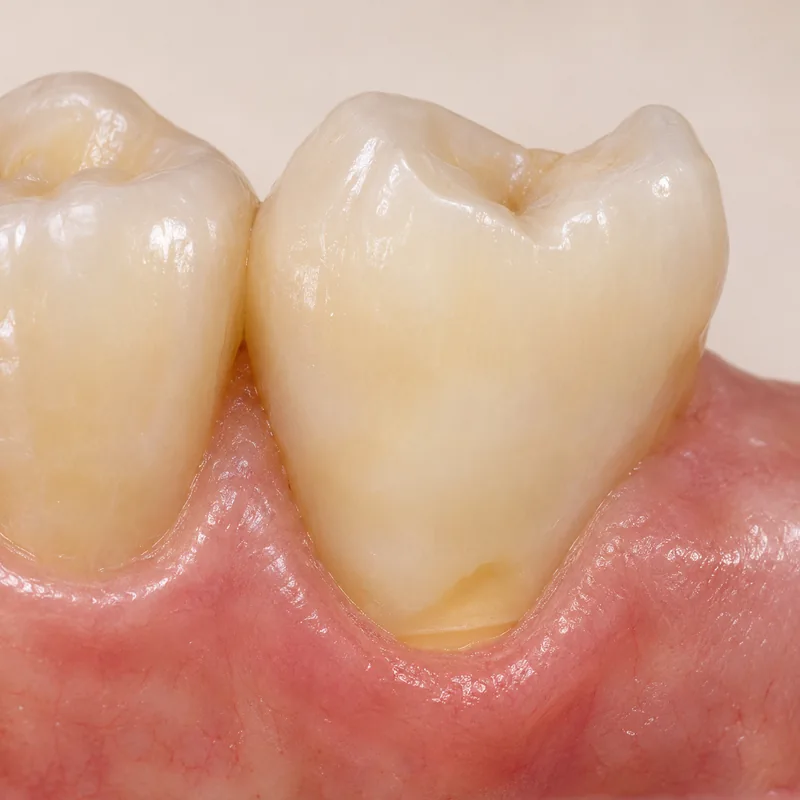
Thin protective layers or exposed dentine at the tooth neck may become sensitive. Not every visible defect causes pain.
Acid exposure and mechanical wear can interact. Shape alone does not prove incorrect brushing or tooth grinding.
Monitoring, reducing contributing factors, treating sensitivity or restoration may be appropriate. The mere presence of a notch does not require a filling.
Sensitivity and visible changes.
Document the finding and compare when needed.
Diet, brushing habits and suitable protection.
Three steps. No audio.
Each scene can also be selected manually.

Silent educational film with German on-screen text and simplified teaching images. Not a patient case or a promised treatment outcome. The full English explanation is available below.
Thin protective layers or exposed dentine at the tooth neck may become sensitive. Not every visible defect causes pain.
Acid exposure and mechanical wear can interact. Shape alone does not prove incorrect brushing or tooth grinding.
Monitoring, reducing contributing factors, treating sensitivity or restoration may be appropriate. The mere presence of a notch does not require a filling.
A defect involves missing hard tooth tissue; recession exposes a root because the gum margin has moved. Both can coexist.
No. Pressure cannot remove the defect and may add unnecessary stress. Technique should be adapted.
Established tissue loss does not simply regrow. Prevention can help reduce further damaging exposure.
Depth, progression, sensitivity and structural condition matter. Examination informs the decision.
Editorially suggested question to discuss with Dr Niusha Barahmand Pour:
Which factors matter in my case, and would monitoring initially be appropriate?
A sensitive notch can be assessed specifically.
Discuss cervical tooth sensitivityAppointment selection at DoctolibA defect involves missing hard tooth tissue; recession exposes a root because the gum margin has moved. Both can coexist.
Editorial research: . General information, not an individual diagnosis or treatment recommendation. Teaching illustrations are simplified and do not depict a patient case.