What is its purpose?
Preparing a tooth for a particular restoration.

Tooth preparation is the planned shaping of a tooth for a filling or restoration. It may remove tooth structure to provide space, retention and a suitable boundary for the proposed restoration. Its extent and shape depend on the defect, the remaining tooth and the treatment design. Removed natural tooth structure does not regrow in its original form.
For training & practice ↓
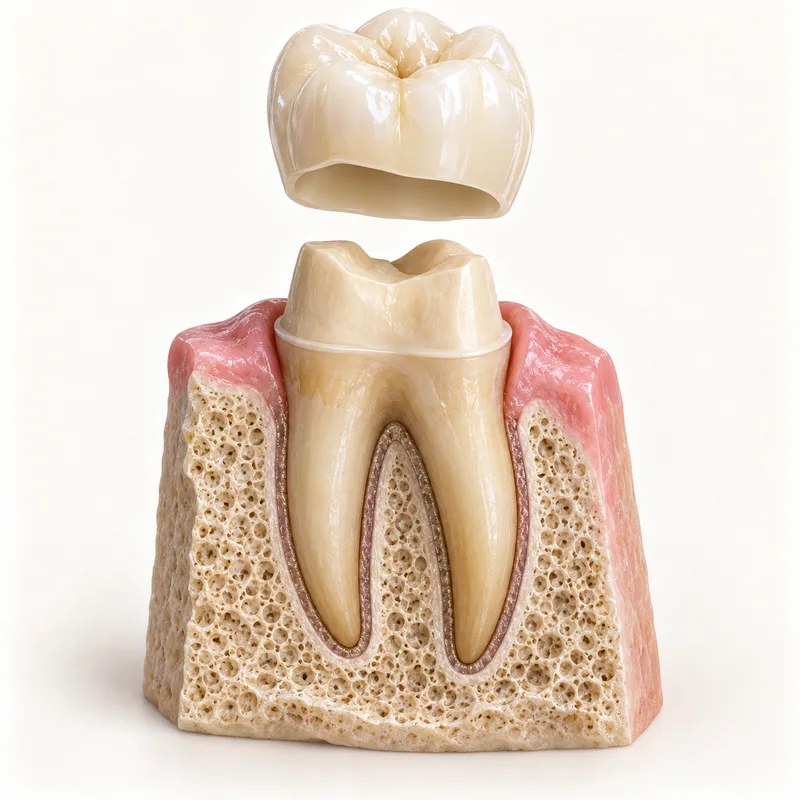
The defect, remaining tooth and possible restorations are assessed before shaping. A crown, inlay and veneer do not require identical preparation.
The shape provides room and retention for the restoration. Protecting the pulp, gums and neighbouring teeth remains part of the preparation.
A temporary crown often protects the tooth between treatment visits. Fit and bite are checked before the definitive restoration is secured.
Preparing a tooth for a particular restoration.
No; findings and restoration design guide the shape.
Removed natural tooth structure does not regrow.
Three steps. No audio.
Each scene can also be selected manually.

Silent educational film with German on-screen text and simplified teaching images. Not a patient case or a promised treatment outcome. The full English explanation is available as text.
Preparation changes the natural tooth. The crown, inlay or veneer is the restoration subsequently fitted to it.
No. Decay removal addresses diseased tooth structure. Preparation describes shaping for a planned restoration; both may take place during the same treatment.
No. Remaining structure, the defect and the restoration type and material guide planning. One standard reduction depth would not suit every tooth.
Local anaesthesia is used when needed. Pressure and sounds may still be noticeable. Tell the clinician immediately if you feel pain during treatment.
No. Preserving a healthy pulp is an aim. Irritation or damage is nevertheless possible; persistent or increasing symptoms need assessment.
A restoration can replace shape, but removed natural tissue does not regrow in that form. Alternatives and preservation should therefore be discussed beforehand.
You can bring this question to your appointment:
How much preparation would each option need, and which alternatives could preserve more of my tooth?
A dental examination can clarify how this relates to your findings and treatment planning.
Discuss your dental findingsAppointment selection at DoctolibPreparation changes the natural tooth. The crown, inlay or veneer is the restoration subsequently fitted to it.
Editorial research: . General information, not an individual diagnosis or treatment recommendation. Teaching illustrations are simplified and do not depict a patient case.
If you turn this on, this website stores which guides you open, separately from advertising preferences. The markers expire after a fixed 30-day period from activation. The list is not sent to us by this feature. You can turn it off here and delete the markers.
Other people using the same browser profile can also see the markers. German and English versions share one marker. Expired entries are removed the next time you open a page with this feature; deleting browser data may remove them earlier. “Viewed” means opened, not read or completed.