Adapt the handle?
May help.

When gripping or precise hand movements are difficult, adapted brushing aids can make oral care easier. Examples include thicker or extended handles and suitable powered toothbrushes. Selection should address the specific difficult task. The aim is to preserve as much independence as possible and add appropriate assistance where needed.
For training & practice ↓
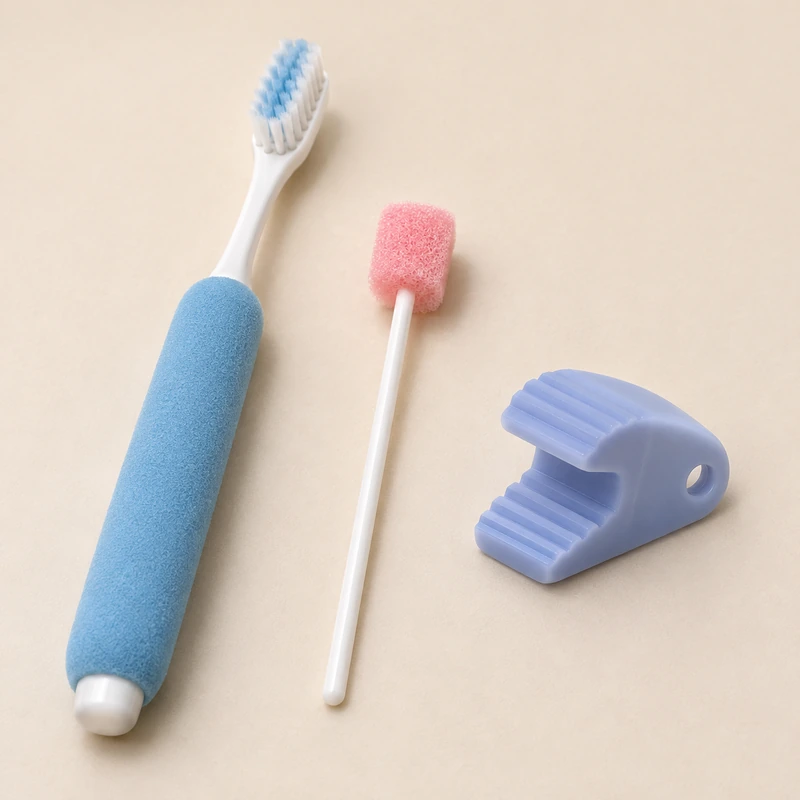
Does the handle slip, is reach limited or does the hand tire quickly? These differences matter more than a particular model.
A thicker handle may be easier to hold. With powered brushes, also consider weight, controls, vibration and noise.
Ask for a demonstration of reaching all tooth surfaces. Clean removable grip aids and the brush handle as instructed and let them dry; the aid itself also needs care.
May help.
No.
An important aim.
Three steps. No audio.
Each scene can also be selected manually.

Silent educational film with German on-screen text and simplified teaching images. Not a patient case or a promised treatment outcome. The full English explanation is available as text.
A grip aid changes how a brush is handled. It does not mean someone must hand over all their oral care.
No. It needs to fit the hand and task. Check whether grip and control actually become easier.
No. It still needs to be guided to the correct surfaces. Weight, controls and vibration can help or hinder.
It may make reaching the mouth easier. Whether an extension is useful depends on movement and control.
Yes. Assistance can focus on difficult tasks. Discuss what the person wants and is able to do independently.
Not necessarily. First show the difficulty and discuss suitable adaptations. A more expensive product is not automatically more suitable.
You can bring this question to your appointment:
Which movement is difficult, and which handle or brush design would help with that specific step?
Bring your current toothbrush and show which part of the routine is difficult.
Discuss dental careAppointment selection at DoctolibA grip aid changes how a brush is handled. It does not mean someone must hand over all their oral care.
Editorial research: . General information, not an individual diagnosis or treatment recommendation. Teaching illustrations are simplified and do not depict a patient case.
If you turn this on, this website stores which guides you open, separately from advertising preferences. The markers expire after a fixed 30-day period from activation. The list is not sent to us by this feature. You can turn it off here and delete the markers.
Other people using the same browser profile can also see the markers. German and English versions share one marker. Expired entries are removed the next time you open a page with this feature; deleting browser data may remove them earlier. “Viewed” means opened, not read or completed.