How may it be noticed?
A visible tooth surface or cutting edge sits at an angle to the tooth row.

A rotated tooth is turned around its long axis. Its visible surface therefore faces a different direction. Rotation can occur together with crowding, but they are not the same. Whether correction is appropriate and possible depends on the whole dental situation.
For training & practice ↓
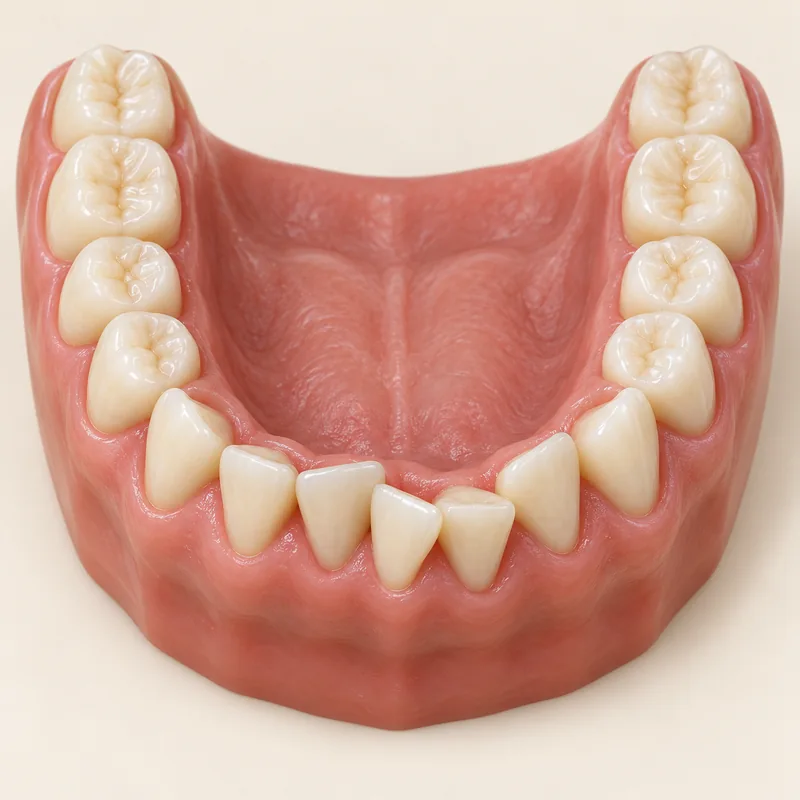
Rotation turns a tooth around its own long axis. Tipping changes its inclination. These movement types must be distinguished in planning.
An unusual tooth surface alone is not enough for planning. Space, neighbouring teeth, bite and the health of gums and supporting tissues are assessed.
Correction may use orthodontic appliances. The suitable method and any supporting measures are chosen individually. Do not push teeth or alter appliances yourself.
A visible tooth surface or cutting edge sits at an angle to the tooth row.
Overall position, space, bite and oral health.
To clarify whether correction is appropriate and which options fit the individual.
Three steps. No audio.
Each scene can also be selected manually.

Silent educational film with German on-screen text and simplified teaching images. Not a patient case or a promised treatment outcome. The full English explanation is available below.
Rotation turns a tooth around its own long axis. Tipping changes its inclination. These movement types must be distinguished in planning.
An unusual tooth surface alone is not enough for planning. Space, neighbouring teeth, bite and the health of gums and supporting tissues are assessed.
Correction may use orthodontic appliances. The suitable method and any supporting measures are chosen individually. Do not push teeth or alter appliances yourself.
Rotation describes how a tooth is turned. Crowding describes insufficient space within the tooth row. They can occur together or separately.
There is no universal answer. Planned and achieved positions can differ in rotational movements; tooth shape and the overall situation matter.
No. A veneer changes the visible tooth surface but does not move the tooth and root. That is different from orthodontic movement.
A photograph or a single angle cannot provide a reliable duration. Planning considers the complete findings and actual progress.
An editorially suggested question for a conversation with Dr. med. dent. Niusha Barahmand Pour:
What does the rotation of this tooth mean for my smile and bite?
One rotated tooth may be noticeable when smiling. The options can be discussed using the complete findings.
Discuss tooth position in personAppointment selection at DoctolibRotation describes how a tooth is turned. Crowding describes insufficient space within the tooth row. They can occur together or separately.
Editorial research: . General information, not an individual diagnosis or treatment recommendation. Teaching illustrations are simplified and do not depict a patient case.